Agnus Dei
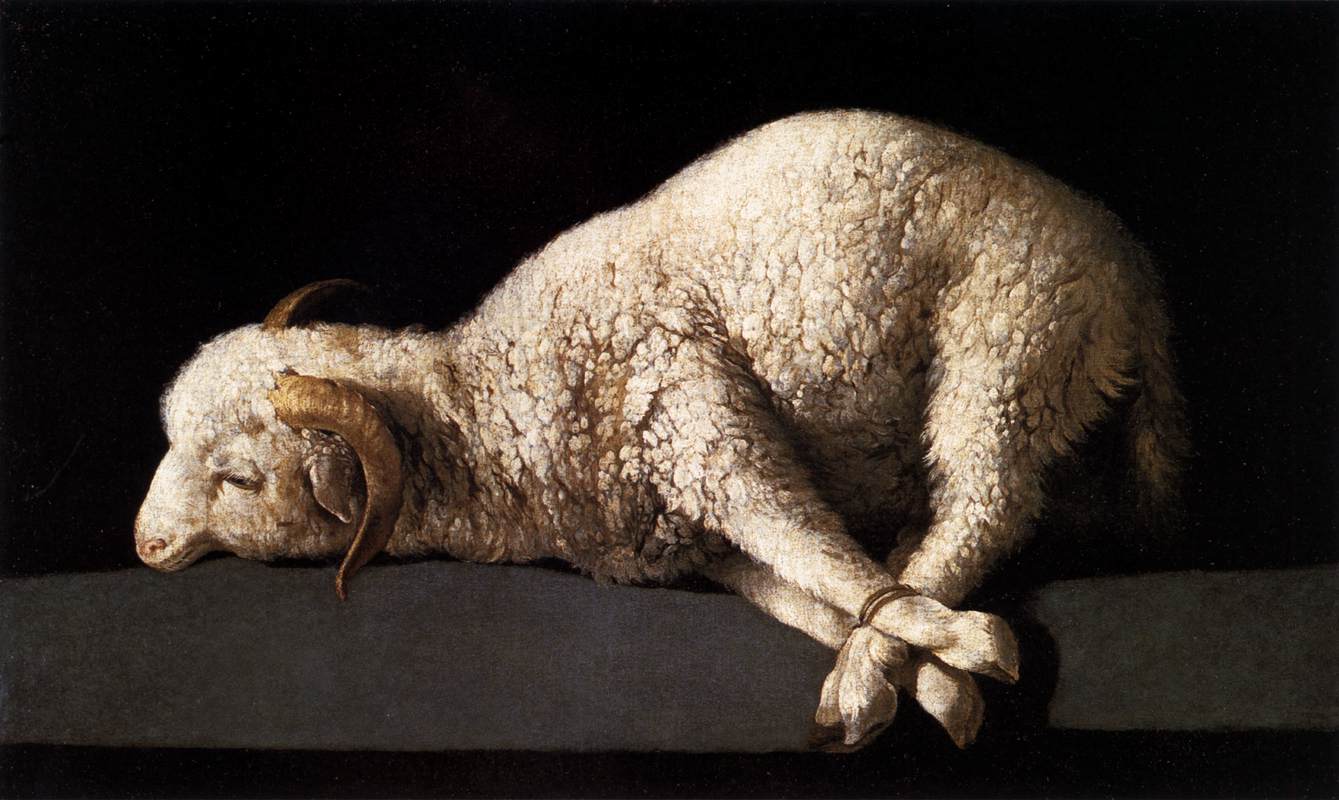
How G-d rules the world!
15 August 2010


26 June 2010
G-d Is Not a Woman, but We Can Call Her One
To all .25 people who might read this post, I am at my parents' house right now taking a much needed weekend from the intensity of Drift Creek Camp. I hope all is well, and here is a reflection on some good conversations I had with people this past week.
A strange family works at Drift Creek Camp. They live in a cultish familial community that engages very little with the larger Church and is very skeptical of those outside their own faith circle (imagine Westboro Baptist with less hate speech and funding). They preach the typical fundamentalist line believing they follow the Bible and no one else does. They do not cuss or talk about hot button issues. Moreover, they think the Church has "allowed" too many unsavory people into its realm. What I found out rather quickly at camp is that I fit into their categories of heretical, sinful, and evil, although they might never say as much. Oddly, we have quite a bit in common (no substances and disbelief in government); nevertheless, their style of belief and ministry has set me off. I can hardly stand to be in their presence, and I hate that they get the opportunity to be around the campers. Here is one topic we clashed on this week, and I am sure we will continue to clash on for the rest of the time I am there.
While the camp was at the beach, we were having fun and roasting marshmallows. I raised my voice and asked, "Who invented Graham Crackers and why did she name them that?" I saw, out of the corner of my eye, the man from the aforementioned family flinch, and he retorted, "What makes you think it was a woman who invented Graham Crackers?" To which I responded, "Why would I assume it was a man who invented Graham Crackers?" Honestly, his overt sexism looked about as assholey as his face since we were the only two males sitting around the fire. Quickly, the conversation devolved into an argument over gender roles during which time I kicked the shit out of him (intellectually), and proceeded to yell at him and patriarchy in general.
I am no moderate when it comes to these situations. If anything I am a raging liberal who could give a shit what the moderates have to say. I am so sick of male-dominated systems. When we talk of them, one looming problem looks us all straight in the face: everyone almost always refers to G-d with masculine pronouns. This is an interesting dilemma, and I wish to address it here.
Is G-d a woman? The obvious answer is "Absolutely not." G-d does not have a sex. G-d transcends such basic human definitions. If G-d did not transcend sex, Genesis 1 would be entirely discredited, and I am not ready to do that. Why then, do we refer to G-d with the gendered "he"? Elizabeth Johnson gives an extensive argument concerning this topic in her book "She Who Is", but I do not have the time nor the energy to deal with her arguments. Instead, I can say this.
For thousands of years, humanity has lived in a patriarchal system. Women were considered property, sub-human, evil, incompetent, and various others deplorable things. As such, anytime anything intelligent or important occurred, the credit was given to men. Any unknown subject was masculinated since clearly a woman could hardly be credited with accomplishing something worthwhile. Doing this means humans made the masculine normative. That is to say men became the standard by which everything else was measured. G-d received masculine titles because maleness was considered to be higher than femaleness. The masculine was above all else.
This has gone on in our cultural collective consciousness for thousands upon thousands of years. The effect on us is daunting. What we now know, however, is that women are not property. They are as equally as capable as men are at leading churches, corporations, countries, families, non-profits, and other activities. Physically, they have a different shape but are made up of the same tissue and cells that men are. If we know that maleness can no longer be normative since we have found women to be equally as capable as men and therefore equally as able to represent the standard by which humans should be measured, what does that tell us about G-d? No longer are we able to refer to G-d exclusively in the masculine. What is normative has changed. Our theology must change as well. For thousands of years we have called G-d "he". In order to undo the male-dominance, the belief that the man is the norm, we must begin to refer to G-d as "she". A gender-neutral phrase is not good enough. It will only excuse patriarchy rather than confront it. We need to hold patriarchy accountable.
By beginning to refer to G-d in the feminine, we look patriarchy in the eye and say, "No more." This practice actively seeks to liberate the female and male consciousness that has, for thousands of years, subsumed the feminie to a status below the masculine. Hence, even thought G-d is not a woman, we can call Her one as a way to confront and move beyond the pain and sin of patriarchy. I hope you will join me in this work. Peace!
-ben adam
A strange family works at Drift Creek Camp. They live in a cultish familial community that engages very little with the larger Church and is very skeptical of those outside their own faith circle (imagine Westboro Baptist with less hate speech and funding). They preach the typical fundamentalist line believing they follow the Bible and no one else does. They do not cuss or talk about hot button issues. Moreover, they think the Church has "allowed" too many unsavory people into its realm. What I found out rather quickly at camp is that I fit into their categories of heretical, sinful, and evil, although they might never say as much. Oddly, we have quite a bit in common (no substances and disbelief in government); nevertheless, their style of belief and ministry has set me off. I can hardly stand to be in their presence, and I hate that they get the opportunity to be around the campers. Here is one topic we clashed on this week, and I am sure we will continue to clash on for the rest of the time I am there.
While the camp was at the beach, we were having fun and roasting marshmallows. I raised my voice and asked, "Who invented Graham Crackers and why did she name them that?" I saw, out of the corner of my eye, the man from the aforementioned family flinch, and he retorted, "What makes you think it was a woman who invented Graham Crackers?" To which I responded, "Why would I assume it was a man who invented Graham Crackers?" Honestly, his overt sexism looked about as assholey as his face since we were the only two males sitting around the fire. Quickly, the conversation devolved into an argument over gender roles during which time I kicked the shit out of him (intellectually), and proceeded to yell at him and patriarchy in general.
I am no moderate when it comes to these situations. If anything I am a raging liberal who could give a shit what the moderates have to say. I am so sick of male-dominated systems. When we talk of them, one looming problem looks us all straight in the face: everyone almost always refers to G-d with masculine pronouns. This is an interesting dilemma, and I wish to address it here.
Is G-d a woman? The obvious answer is "Absolutely not." G-d does not have a sex. G-d transcends such basic human definitions. If G-d did not transcend sex, Genesis 1 would be entirely discredited, and I am not ready to do that. Why then, do we refer to G-d with the gendered "he"? Elizabeth Johnson gives an extensive argument concerning this topic in her book "She Who Is", but I do not have the time nor the energy to deal with her arguments. Instead, I can say this.
For thousands of years, humanity has lived in a patriarchal system. Women were considered property, sub-human, evil, incompetent, and various others deplorable things. As such, anytime anything intelligent or important occurred, the credit was given to men. Any unknown subject was masculinated since clearly a woman could hardly be credited with accomplishing something worthwhile. Doing this means humans made the masculine normative. That is to say men became the standard by which everything else was measured. G-d received masculine titles because maleness was considered to be higher than femaleness. The masculine was above all else.
This has gone on in our cultural collective consciousness for thousands upon thousands of years. The effect on us is daunting. What we now know, however, is that women are not property. They are as equally as capable as men are at leading churches, corporations, countries, families, non-profits, and other activities. Physically, they have a different shape but are made up of the same tissue and cells that men are. If we know that maleness can no longer be normative since we have found women to be equally as capable as men and therefore equally as able to represent the standard by which humans should be measured, what does that tell us about G-d? No longer are we able to refer to G-d exclusively in the masculine. What is normative has changed. Our theology must change as well. For thousands of years we have called G-d "he". In order to undo the male-dominance, the belief that the man is the norm, we must begin to refer to G-d as "she". A gender-neutral phrase is not good enough. It will only excuse patriarchy rather than confront it. We need to hold patriarchy accountable.
By beginning to refer to G-d in the feminine, we look patriarchy in the eye and say, "No more." This practice actively seeks to liberate the female and male consciousness that has, for thousands of years, subsumed the feminie to a status below the masculine. Hence, even thought G-d is not a woman, we can call Her one as a way to confront and move beyond the pain and sin of patriarchy. I hope you will join me in this work. Peace!
-ben adam
04 June 2010
Coping With Identity and Place: Resistance as a Way of Life
Right now, I am sitting in a coffee shop. This is no ordinary Starbucks; this is a dyed-in-the-wool coffee roaster. From my vantage point, I can watch two casually-dressed, scruffy-faced fellows load coffee beans into a large roaster which slowly churns the beans as they cook. They then transfer them into bags which they label, seal, and box. One of the large burlap bags from which they take their beans is labeled in all caps "Product of Colombia." In a way, the bag has been staring at me for the last hour or so. It discomforts me.
When we were in Colombia, we were told the coffee there was terrible. Not being a coffee drinker myself, I took people's comments at face value. It was a shocking reality. Colombia's coffee reputation precedes itself as being a prime locale from which coffee derives. Even I knew that. Juan Valdez hails from Colombia, and it only seemed natural that, in country, the coffee would be superb. It isn't, and there is one reason why.
I read on the plane back to the States that the U.S. is by far the world's largest coffee consumer. Based on no evidence whatsoever, I am going to go so far as to say that Seattle is, per capita, the greatest consumer of coffee in the U.S. Even if this is completely false, a lot of people drink a lot of coffee in Seattle. Now, more than a week after I left Colombia, I am facing a bag of quality Colombian coffee in one of the most coffee-saturated cities in the world. There is a major disconnect here.
The issue is no longer free trade versus fair trade. The issue is a society who thinks it is entitled to the wealth and resources of others. When the resources indigenous to a region become a scarcity, something has gone awry. Coffee consumption might be the best measure of this problem. For all its liberal rhetoric, Seattle leads the way in majority world exploitation or, at the very least, robbery. Herein lies the problem with the liberal agenda. It wants reform. This agenda looks at the current system with affirmation. Liberals then work to change the rhetoric and the people within the system. They redefine the family to include same-sex couples, they elect non-white leaders, they provide jobs for women, and demand a minimum wage. They do this in the name of the system's highest values and virtues, "equality", "freedom", and "opportunity". The system accepts their reforms, and it return, it provides them with what they want: abundant coffee, luxury condos, "green" cars, fair trade foods from around the globe, and the latest styles of textiles. In the end, they end up stealing coffee from Colombians as billions of people worldwide suffer for the sake of conscionable products.
In the end, the liberal agenda has been fighting the right battle on the wrong field. Since they accepted the basic tenants of the system, their reform has done little more than put a different face on the same monster. Meanwhile, they bow down to the monster in gratitude for its delivery of consumable goods. Life lived for the creation of a truly new world requires one rejects the system, seeks to deconstruct it, and rebuilds within its ruins. The new way of being pays no homage to the imperial monsters of neo-liberalism and capitalism. Instead, it embraces diversity without demanding satiation. It looks not beyond its own limited reach, and it is content with what it produces. This is resistance at its greatest pinnacle: when it becomes very, very small. It is time to reject this economic system outright, even if it costs us the benefits of good tasting coffee.
When we were in Colombia, we were told the coffee there was terrible. Not being a coffee drinker myself, I took people's comments at face value. It was a shocking reality. Colombia's coffee reputation precedes itself as being a prime locale from which coffee derives. Even I knew that. Juan Valdez hails from Colombia, and it only seemed natural that, in country, the coffee would be superb. It isn't, and there is one reason why.
I read on the plane back to the States that the U.S. is by far the world's largest coffee consumer. Based on no evidence whatsoever, I am going to go so far as to say that Seattle is, per capita, the greatest consumer of coffee in the U.S. Even if this is completely false, a lot of people drink a lot of coffee in Seattle. Now, more than a week after I left Colombia, I am facing a bag of quality Colombian coffee in one of the most coffee-saturated cities in the world. There is a major disconnect here.
The issue is no longer free trade versus fair trade. The issue is a society who thinks it is entitled to the wealth and resources of others. When the resources indigenous to a region become a scarcity, something has gone awry. Coffee consumption might be the best measure of this problem. For all its liberal rhetoric, Seattle leads the way in majority world exploitation or, at the very least, robbery. Herein lies the problem with the liberal agenda. It wants reform. This agenda looks at the current system with affirmation. Liberals then work to change the rhetoric and the people within the system. They redefine the family to include same-sex couples, they elect non-white leaders, they provide jobs for women, and demand a minimum wage. They do this in the name of the system's highest values and virtues, "equality", "freedom", and "opportunity". The system accepts their reforms, and it return, it provides them with what they want: abundant coffee, luxury condos, "green" cars, fair trade foods from around the globe, and the latest styles of textiles. In the end, they end up stealing coffee from Colombians as billions of people worldwide suffer for the sake of conscionable products.
In the end, the liberal agenda has been fighting the right battle on the wrong field. Since they accepted the basic tenants of the system, their reform has done little more than put a different face on the same monster. Meanwhile, they bow down to the monster in gratitude for its delivery of consumable goods. Life lived for the creation of a truly new world requires one rejects the system, seeks to deconstruct it, and rebuilds within its ruins. The new way of being pays no homage to the imperial monsters of neo-liberalism and capitalism. Instead, it embraces diversity without demanding satiation. It looks not beyond its own limited reach, and it is content with what it produces. This is resistance at its greatest pinnacle: when it becomes very, very small. It is time to reject this economic system outright, even if it costs us the benefits of good tasting coffee.
02 June 2010
Don't Read This
There is absolutely no reason why I should post what I am about to write on the blogosphere, but I am bored as hell, with a million things to do. Plus, my generation has a sick sense of voyeurism. We want to be watched in our most personal moments. This is my fulfillment of that strange desire.
I do not have a best friend. I cannot explain why. For my entire life, I have had a best friend. When I was very young, my best friend was named Jordan. He just got married. In elementary school, it was Alex. We are still friends, but we are very different now. In middle school, I suppose I did not really have a best friend. Maybe that is why I hated it so much. In high school, I had several best friends. Zeek was one. I talked to him about everything I believed. We talked about faith and politics. Whatever I said or thought, I did not fear telling it to him. We actually went to college together, but we drifted apart. We lived in different dorms and hung out with different people. Craig was my other one of my best friends in high school. I told him my deepest, darkest secrets. We talked about girls, sex, and anything else that our dirty little minds could think up. Nevertheless, he went to OSU; I went to SPU. We grew distant both geographically and emotionally. I still love him, but we are not what we were. Janelle, my girlfriend in high school, served as another best friend. I told her everything. Our closeness surpassed even my friendships with Zeek and Craig. When we broke up, I lost a huge piece of myself. It was hard but necessary. From there, my best friend was Zach. We shared many things in common, and our sophomore year of college we lived together in the dorms. Zach stood firm as a rock for me. I confided my whole life to him. When Zach met Jessica, we fell away. Even though I still live with him, we see each other very little. I do not feel as though I can confide my deepest emotions in him. Furthermore, our priorities grow increasingly distant. Zach wants to get married, have a career, and raise a family. I want to live in a way that subverts the ruling powers. I want to undo the damage being done to humanity and to the earth. I had another best friend in college. Her name was Katie Ann. Like a fool, I confused intimacy with attraction. I convinced myself that I loved her. In fact, I had simply become deeply connected to her. After we started dating, I realized the difference between closeness and romance across genders. Breaking up with her caused a serious rift. I lost another piece of myself. After that, I wandered aimlessly seeking some form of intimacy that would provide the challenge and trust of a deep enduring friendship. I am yet to find it.
Right now, I feel that emptiness the most. I feel totally alone. There is no one to talk to or to go on a walk with. There is no one to look forward to seeing. There are only friendships which I will engage in and enjoy. None will be like those of old. To me, a best friend longs to see you, but not in the way of missing you. A best friend longs to see you because you are her little piece of continuity in a disjointed world. You long to see her because she is your stationary point in a society spun out of control. Without your best friend, the day passes you by without anything special. Nothing unique happens. The light never gets a chance to flicker without her.
Sometimes I forget, making a best friend is very difficult work. It takes time and persistence. I suppose I live in a time in which I am waiting for my next best friend. I am impatient. Everyday, I seek, wondering who it may be. If only I could choose. Maybe it will happen soon. I guess we'll see. Peace!
-ben adam
I do not have a best friend. I cannot explain why. For my entire life, I have had a best friend. When I was very young, my best friend was named Jordan. He just got married. In elementary school, it was Alex. We are still friends, but we are very different now. In middle school, I suppose I did not really have a best friend. Maybe that is why I hated it so much. In high school, I had several best friends. Zeek was one. I talked to him about everything I believed. We talked about faith and politics. Whatever I said or thought, I did not fear telling it to him. We actually went to college together, but we drifted apart. We lived in different dorms and hung out with different people. Craig was my other one of my best friends in high school. I told him my deepest, darkest secrets. We talked about girls, sex, and anything else that our dirty little minds could think up. Nevertheless, he went to OSU; I went to SPU. We grew distant both geographically and emotionally. I still love him, but we are not what we were. Janelle, my girlfriend in high school, served as another best friend. I told her everything. Our closeness surpassed even my friendships with Zeek and Craig. When we broke up, I lost a huge piece of myself. It was hard but necessary. From there, my best friend was Zach. We shared many things in common, and our sophomore year of college we lived together in the dorms. Zach stood firm as a rock for me. I confided my whole life to him. When Zach met Jessica, we fell away. Even though I still live with him, we see each other very little. I do not feel as though I can confide my deepest emotions in him. Furthermore, our priorities grow increasingly distant. Zach wants to get married, have a career, and raise a family. I want to live in a way that subverts the ruling powers. I want to undo the damage being done to humanity and to the earth. I had another best friend in college. Her name was Katie Ann. Like a fool, I confused intimacy with attraction. I convinced myself that I loved her. In fact, I had simply become deeply connected to her. After we started dating, I realized the difference between closeness and romance across genders. Breaking up with her caused a serious rift. I lost another piece of myself. After that, I wandered aimlessly seeking some form of intimacy that would provide the challenge and trust of a deep enduring friendship. I am yet to find it.
Right now, I feel that emptiness the most. I feel totally alone. There is no one to talk to or to go on a walk with. There is no one to look forward to seeing. There are only friendships which I will engage in and enjoy. None will be like those of old. To me, a best friend longs to see you, but not in the way of missing you. A best friend longs to see you because you are her little piece of continuity in a disjointed world. You long to see her because she is your stationary point in a society spun out of control. Without your best friend, the day passes you by without anything special. Nothing unique happens. The light never gets a chance to flicker without her.
Sometimes I forget, making a best friend is very difficult work. It takes time and persistence. I suppose I live in a time in which I am waiting for my next best friend. I am impatient. Everyday, I seek, wondering who it may be. If only I could choose. Maybe it will happen soon. I guess we'll see. Peace!
-ben adam
01 June 2010
What Are We Missing?
I went to a wedding on Saturday. Honestly, I hated it. Traditional weddings bore me. They followed the formula perfectly with a sermon about why everyone needs to be married, why men are not good without women as their helpers, and a call to the woman to "respect" her new husband. I left pissed off even though he was a friend of mine for over 20 years. What I found most striking, however, was my mother's response to my frustration.
My mother, the hopeless optimist, listened to me complain about the overt patriarchy occurring. She responded with this, "Yes, you're right ben, but what I appreciated about the pastor's message is he called them to always put G-d first." For me, this leaves me feeling completely unsatisfied. Here is why:
What does "put G-d first" even mean? How do we "put G-d first"? The very thought of doing that puts me in an abstract activity of deity acknowledgment. Honestly, to "put G-d first" cannot fulfill our needs. If their marriage listens to and follows in the direction of the pastor's advice and they work hard to put G-d first, what happens when they face a systemic problem in their marriage? What if they go to church, pray every morning, read the Bible every day, and he beats her? Are they any different than a couple who do not put G-d first yet suffer from male physical abuse? Similarly, what if they have a flawless, fantastic marriage while putting G-d first? Do others who do not put G-d first all have terrible marriages? We must face Christians with the same divorce rate as the rest of society, even among the couples who "put G-d first". We are missing something.
Every one of us missed something in that chapel. Christians face a crisis because we miss it. I do not know what it is. I know what it is not: sex, money, drugs, alcohol, wealth, possessions, war, sovereignty, food, or whatever else it is we want. Christians miss something in a significant way every day. It leaves me feeling empty. I do not know what putting G-d first means. What I do know is if we do not begin to fight against the death-dealing powers ruling the world, there may not be much of a G-d to put first left. We need to reclaim resistance as the source of our devotion to G-d. Otherwise, we miss something. We miss G-d giving us life in the face of powerful demons who bring only death.
My mother, the hopeless optimist, listened to me complain about the overt patriarchy occurring. She responded with this, "Yes, you're right ben, but what I appreciated about the pastor's message is he called them to always put G-d first." For me, this leaves me feeling completely unsatisfied. Here is why:
What does "put G-d first" even mean? How do we "put G-d first"? The very thought of doing that puts me in an abstract activity of deity acknowledgment. Honestly, to "put G-d first" cannot fulfill our needs. If their marriage listens to and follows in the direction of the pastor's advice and they work hard to put G-d first, what happens when they face a systemic problem in their marriage? What if they go to church, pray every morning, read the Bible every day, and he beats her? Are they any different than a couple who do not put G-d first yet suffer from male physical abuse? Similarly, what if they have a flawless, fantastic marriage while putting G-d first? Do others who do not put G-d first all have terrible marriages? We must face Christians with the same divorce rate as the rest of society, even among the couples who "put G-d first". We are missing something.
Every one of us missed something in that chapel. Christians face a crisis because we miss it. I do not know what it is. I know what it is not: sex, money, drugs, alcohol, wealth, possessions, war, sovereignty, food, or whatever else it is we want. Christians miss something in a significant way every day. It leaves me feeling empty. I do not know what putting G-d first means. What I do know is if we do not begin to fight against the death-dealing powers ruling the world, there may not be much of a G-d to put first left. We need to reclaim resistance as the source of our devotion to G-d. Otherwise, we miss something. We miss G-d giving us life in the face of powerful demons who bring only death.
Back From Colombia
Hello. I am back from Colombia and other travels. This is my first post about the experience, and I will be only discussing how the trip changed me but not why.
First, I went with Christian Peacemaker Teams, but very little of it was "Christian" in the narrowly defined Western view of Christianity. We recognized our Christianity as a unifying subject but not a driving object. I left feeling spiritually suffocated and dry. Ironically, as difficult as this was, I appreciated it immensely. It reoriented my faith away from an ecclesio-centrism toward resistance-centered spirituality. It reminded me of my favorite verses in the Bible from Amos 5.21-24
I hate, I despise your festivals,
and I take no delight in your solemn assemblies.
Even though you offer me your burnt-offerings and grain-offerings,
I will not accept them;
and the offerings of well-being of your fatted animals
I will not look upon.
Take away from me the noise of your songs;
I will not listen to the melody of your harps.
But let justice roll down like waters,
and righteousness like an ever-flowing stream.
The time for praise songs is up. The time for justice has come. The economic system that at this very moment continues to consume the world is one of death, and Christians must rise to challenge it. If we do not, we become unfaithful. We affirm G-d with our lips and avoid G-d with our lives. Needless to say, it will be difficult to go to church and even more difficult to work for one which is a distinct possibility in the coming months.
I am now less concerned with doctrinal discrepancies. If people are willing to stand and resist the dehumanizing power of global capitalism, then they are not against us. I would say, in a sense, CPT made me more pluralist, but actually, it reoriented my objectiveness. No more do I accept a Christian faith that pays homage to the flag. That might sound harsh, but it is true. G-d hates flags.
I now have a longing desire to learn Spanish and perhaps more languages. I will be learning all I can about Latin America history and economics. Hopefully, in the next couple years I will go back to school. I am not sure what I will study, but my days of academic theology are almost over. Certainly, I appreciated my theological education. It will stick with me forever. The skills I learned were invaluable, but the time has come to invest myself in something with which I am able to reach out beyond abstract statements concerning G-d. Besides, my theological education may come best from the dirt rather than from the school built on it.
Finally, my new goal is deconstruction. The government must be taken apart. Neo-liberalism must be undone. The systems and structures that support death must pass away. In that rubble, up will rise the true Church. The people who say no to death and yes to resurrection. Certainly G-d will be on their side. I cannot wait. Peace!
-ben adam
First, I went with Christian Peacemaker Teams, but very little of it was "Christian" in the narrowly defined Western view of Christianity. We recognized our Christianity as a unifying subject but not a driving object. I left feeling spiritually suffocated and dry. Ironically, as difficult as this was, I appreciated it immensely. It reoriented my faith away from an ecclesio-centrism toward resistance-centered spirituality. It reminded me of my favorite verses in the Bible from Amos 5.21-24
I hate, I despise your festivals,
and I take no delight in your solemn assemblies.
Even though you offer me your burnt-offerings and grain-offerings,
I will not accept them;
and the offerings of well-being of your fatted animals
I will not look upon.
Take away from me the noise of your songs;
I will not listen to the melody of your harps.
But let justice roll down like waters,
and righteousness like an ever-flowing stream.
The time for praise songs is up. The time for justice has come. The economic system that at this very moment continues to consume the world is one of death, and Christians must rise to challenge it. If we do not, we become unfaithful. We affirm G-d with our lips and avoid G-d with our lives. Needless to say, it will be difficult to go to church and even more difficult to work for one which is a distinct possibility in the coming months.
I am now less concerned with doctrinal discrepancies. If people are willing to stand and resist the dehumanizing power of global capitalism, then they are not against us. I would say, in a sense, CPT made me more pluralist, but actually, it reoriented my objectiveness. No more do I accept a Christian faith that pays homage to the flag. That might sound harsh, but it is true. G-d hates flags.
I now have a longing desire to learn Spanish and perhaps more languages. I will be learning all I can about Latin America history and economics. Hopefully, in the next couple years I will go back to school. I am not sure what I will study, but my days of academic theology are almost over. Certainly, I appreciated my theological education. It will stick with me forever. The skills I learned were invaluable, but the time has come to invest myself in something with which I am able to reach out beyond abstract statements concerning G-d. Besides, my theological education may come best from the dirt rather than from the school built on it.
Finally, my new goal is deconstruction. The government must be taken apart. Neo-liberalism must be undone. The systems and structures that support death must pass away. In that rubble, up will rise the true Church. The people who say no to death and yes to resurrection. Certainly G-d will be on their side. I cannot wait. Peace!
-ben adam
10 May 2010
Mennonites, Pacifism, and Patriarchy
One of the reasons I decided to join the Mennonite Church was its emphasis on peaceableness. More than the Evangelical Friends Church which I grew up in who focus on traditional evangelism which relies more on apologetics than action, the Mennonites have created many programs, books, curriculum, and everyday opportunities for its members to actively engage in peaceable and nonviolent activity. Mennonite Central Committee, Mennonite Conciliation Services, International Conciliation Services, and Christian Peacemaker Teams, to name the major arms of Mennonite peacemaking, can be found all over the world working to disseminate violence, oppression, and injustice in a variety of ways. I thank G-d for this, and in no way do I want this to end. Nevertheless, I am dissatisfied with it, and here is why.
When I first learned about the early Anabaptists, they mystified me. At the time, and still currently, I believed strongly that Christians need external identifying markers which display whose kingdom they belong to. Logically, these markers would be simple dress, plain living, loving attitude toward all people, operational practices of forgiveness, and dissension toward the state. The Anabaptists fit this mold perfectly, and the Mennonites are the direct descendants of the Anabaptists. Naturally, for reasons that just the above, I joined them. I partook in their practice of adult baptism. In two days I leave to work with Christian Peacemaker Teams, and I have applied to work as a pastor in the Mennonite Church. I have become a decent Mennonite in my own estimation, yet the baggage that comes with committing oneself to the Church (and it is the reason why I believe people need to be in Church) is the onus of responsibility for those within the Church. Thus, for example, whether we like it or not, the Catholic priest scandal effects us, and we are responsible for them. I am responsible for the Mennonite Church. This is the problem I see.
The early Anabaptists were killed in droves. Their martyrdom resulted from the incendiary practices I mentioned above. They lived in the middle of Christendom where "everyone" was a Christian, yet they claimed with reckless abandon that Christian faith could not be so oppressive, violent, and extravagant. Following G-d meant forgiveness, peace, and simplicity. Moreover, it meant G-d and G-d alone is the ruler of the world. Therefore, in there system of princes, barons, and Holy Roman Emperors, only G-d's rule mattered. Essentially, Anabaptists declared the state illegitimate, and since the state does not bear the sword for nothing, they were massacred. Since they believed G-d ruled the whole world, G-d loved even those who put the Anabaptists to death. Their commitment to nonviolence spawned from their belief in G-d's overarching sovereignty and love. This came along with simple living, distinctive dress, and many other practices which now seem all but forgotten by all descendants of the Anabaptists except the Amish. In short, the Mennonite practice of peaceableness was salvaged from Anabaptism and elevated into our consciousness as the distinctive Mennonite and Christian practice.
Why has pacifism become the defining belief of Mennonites? Why is our insistence on believer's baptism, simple living, radical dissension toward the state, and forgiveness no longer causing the waves they once did? These are the questions of a somewhat dissatisfied Mennonite who joined the Mennonite Church expecting one thing and finding another. I am going to attempt to answer the first as a way toward the other.
When the Anabaptists suffered massive amounts of persecution under the hand of German princes and other feudal lords, they became more and more sectarian as they became persecuted out of society. They kept to themselves and lived in simple ways upon the land. They earned the nickname "The Quiet in the Land". They worshiped and lived without much interaction or association with the outside world they found to be sinful and corrupt. In the early 20th century, with the advent of World War I leading World War II, the question of patriotism and commitment to a government deeply entrenched in conflict was at the tip of everyone's tongue. Mennonites, who dared not pledge their allegiance to a flag or recite the national anthem, became a scourge in the eyes of the war-driven nation. The draft ripped "The Quiet in the Land" from their homes and coerced them into serving in various capacities. Suddenly, the Mennonites were no longer able to keep quiet and to themselves. Engagement with the violent infant empire became necessary.
Many men returned from their conscripted service changed. They brought back a new perspective, and the Mennonite emphasis on peaceableness no longer remained under the shackles of inaction. Pacifism grew into nonviolent direct action against those who oppress others with the sword. Requisite in this new perspective was a greater interaction with those outside Mennonite circles. Consequently, Mennonites compromised their own distinctive practices in order to become peacemakers. The Vietnam War only exacerbated the issue. As young men faced a draft once more, they came into a head-on collision the possibility of being forced to fight and kill other people in the name of a country attempting to usurp the throne of G-d. The Mennonite's refusal to do this centralized pacifism as Mennonite distinctiveness. To be Mennonite meant pacifism.
The reason Mennonite equaled Christian pacifist did not derive from a holistic Church experience. It derived from men's fear of being drafted. In a way, men have been the sole producers of Mennonite belief. Peacemaking and pacifism came into the forefront from male experience. Peacemaking is not bad, but we have thus far let it override our original ideals. I believe if we look closely, it might even infringe on what women would like to see in the Church. Certainly, many Mennonite women I know affirm peacemaking, but could they in fact have their own experiences to contribute to the discussion that would help us be G-d's people in the world beyond simply peaceable activity? Perhaps, with a reduced patriarchy we could recuperate some of our original distinctiveness, or perhaps, we could claim new practices rooted out of the controversial belief that G-d is sovereign and loving. I do not want the end of peacemaking, but I do want the input of female voices. Up until now, male voices have drowned out all others with a cry for peace. The cost has been a loss of identity and a confusion as to who peace is made for. I believe it is possible for us to become the Mennonites, not of old, but of new without forsaking our roots. Have we forsaken them? Maybe not yet, but soon, they will be all but forgotten. I pray we can once again be the persecuted faithful trying to spread G-d's love in the world. Peace!
When I first learned about the early Anabaptists, they mystified me. At the time, and still currently, I believed strongly that Christians need external identifying markers which display whose kingdom they belong to. Logically, these markers would be simple dress, plain living, loving attitude toward all people, operational practices of forgiveness, and dissension toward the state. The Anabaptists fit this mold perfectly, and the Mennonites are the direct descendants of the Anabaptists. Naturally, for reasons that just the above, I joined them. I partook in their practice of adult baptism. In two days I leave to work with Christian Peacemaker Teams, and I have applied to work as a pastor in the Mennonite Church. I have become a decent Mennonite in my own estimation, yet the baggage that comes with committing oneself to the Church (and it is the reason why I believe people need to be in Church) is the onus of responsibility for those within the Church. Thus, for example, whether we like it or not, the Catholic priest scandal effects us, and we are responsible for them. I am responsible for the Mennonite Church. This is the problem I see.
The early Anabaptists were killed in droves. Their martyrdom resulted from the incendiary practices I mentioned above. They lived in the middle of Christendom where "everyone" was a Christian, yet they claimed with reckless abandon that Christian faith could not be so oppressive, violent, and extravagant. Following G-d meant forgiveness, peace, and simplicity. Moreover, it meant G-d and G-d alone is the ruler of the world. Therefore, in there system of princes, barons, and Holy Roman Emperors, only G-d's rule mattered. Essentially, Anabaptists declared the state illegitimate, and since the state does not bear the sword for nothing, they were massacred. Since they believed G-d ruled the whole world, G-d loved even those who put the Anabaptists to death. Their commitment to nonviolence spawned from their belief in G-d's overarching sovereignty and love. This came along with simple living, distinctive dress, and many other practices which now seem all but forgotten by all descendants of the Anabaptists except the Amish. In short, the Mennonite practice of peaceableness was salvaged from Anabaptism and elevated into our consciousness as the distinctive Mennonite and Christian practice.
Why has pacifism become the defining belief of Mennonites? Why is our insistence on believer's baptism, simple living, radical dissension toward the state, and forgiveness no longer causing the waves they once did? These are the questions of a somewhat dissatisfied Mennonite who joined the Mennonite Church expecting one thing and finding another. I am going to attempt to answer the first as a way toward the other.
When the Anabaptists suffered massive amounts of persecution under the hand of German princes and other feudal lords, they became more and more sectarian as they became persecuted out of society. They kept to themselves and lived in simple ways upon the land. They earned the nickname "The Quiet in the Land". They worshiped and lived without much interaction or association with the outside world they found to be sinful and corrupt. In the early 20th century, with the advent of World War I leading World War II, the question of patriotism and commitment to a government deeply entrenched in conflict was at the tip of everyone's tongue. Mennonites, who dared not pledge their allegiance to a flag or recite the national anthem, became a scourge in the eyes of the war-driven nation. The draft ripped "The Quiet in the Land" from their homes and coerced them into serving in various capacities. Suddenly, the Mennonites were no longer able to keep quiet and to themselves. Engagement with the violent infant empire became necessary.
Many men returned from their conscripted service changed. They brought back a new perspective, and the Mennonite emphasis on peaceableness no longer remained under the shackles of inaction. Pacifism grew into nonviolent direct action against those who oppress others with the sword. Requisite in this new perspective was a greater interaction with those outside Mennonite circles. Consequently, Mennonites compromised their own distinctive practices in order to become peacemakers. The Vietnam War only exacerbated the issue. As young men faced a draft once more, they came into a head-on collision the possibility of being forced to fight and kill other people in the name of a country attempting to usurp the throne of G-d. The Mennonite's refusal to do this centralized pacifism as Mennonite distinctiveness. To be Mennonite meant pacifism.
The reason Mennonite equaled Christian pacifist did not derive from a holistic Church experience. It derived from men's fear of being drafted. In a way, men have been the sole producers of Mennonite belief. Peacemaking and pacifism came into the forefront from male experience. Peacemaking is not bad, but we have thus far let it override our original ideals. I believe if we look closely, it might even infringe on what women would like to see in the Church. Certainly, many Mennonite women I know affirm peacemaking, but could they in fact have their own experiences to contribute to the discussion that would help us be G-d's people in the world beyond simply peaceable activity? Perhaps, with a reduced patriarchy we could recuperate some of our original distinctiveness, or perhaps, we could claim new practices rooted out of the controversial belief that G-d is sovereign and loving. I do not want the end of peacemaking, but I do want the input of female voices. Up until now, male voices have drowned out all others with a cry for peace. The cost has been a loss of identity and a confusion as to who peace is made for. I believe it is possible for us to become the Mennonites, not of old, but of new without forsaking our roots. Have we forsaken them? Maybe not yet, but soon, they will be all but forgotten. I pray we can once again be the persecuted faithful trying to spread G-d's love in the world. Peace!
Subscribe to:
Posts (Atom)