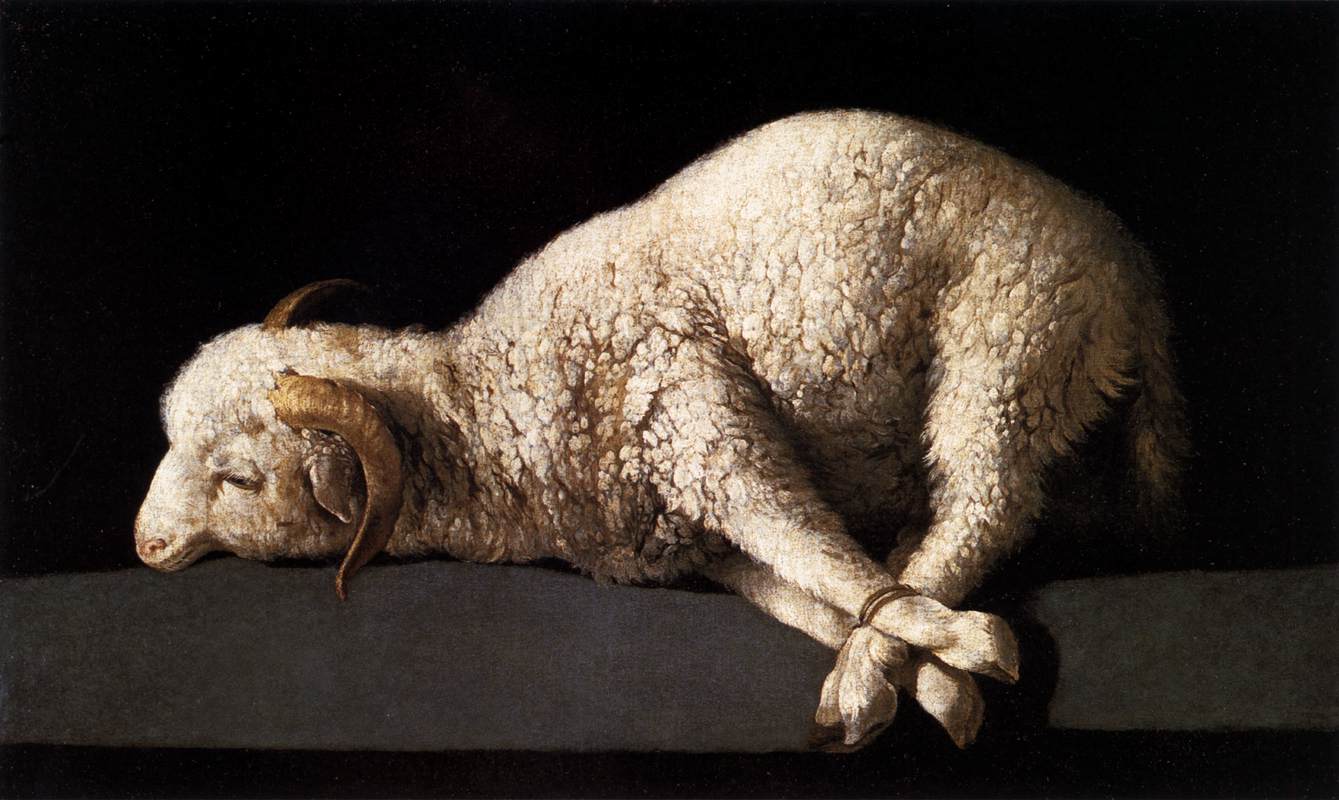
Agnus Dei

Agnus Dei
How G-d rules the world!
Showing posts with label Theology. Show all posts

24 October 2010

Yelling at a Person Under a Bus, ‘Watch Out! You’re About to Get Hit By a Bus!’

                The title of this sermon is Yelling at a Person Under a Bus, ‘Watch Out! You’re About to Get Hit By a Bus!’ It concerns the 14th chapter of the Book of Jeremiah which might very well be one of the most important books for our time.  Despite its importance, I believe a great deal of confusion surrounds our reading of Jeremiah.  The confusion grows out of resistance to its absolutely radical message: we, as human beings, can wound G-d, and there are consequences for causing divine damage.  The theology of Jeremiah flies in the face of the predominating theology that turns G-d into Superman and Jesus into Clark Kent, G-d’s everyman alter ego.  G-d’s superhero status originated with Israel’s false prophets and now emanates from pulpits everywhere whether it is Joel Osteen and the prosperity gospel or Richard Dawkins and his assault on theism.  The long and the short of it is this, G-d  When we read Jeremiah, we find a G-d who is entirely different. has faded away from being seen as the creator who is intimately tied to creation, and instead is seen as a hero out of old western films: killing the bad guys and rescuing the innocent.
Jeremiah 14
                If you do not already, please open up Jeremiah 14 (or click here: http://bible.oremus.org/?ql=154975713).  I want to work through it as quickly and as extensively as possible.  What we have in these verses is a dialogue occurring between Yhwh, Jeremiah, and the people of Judah.  The people feel abandoned as they struggle through a drought and war; Yhwh feels abandoned by the people who Yhwh established a covenant with so long ago; and Jeremiah feels alone as the only prophet proclaiming destruction instead of peace.  This dialogue opens with an image of Judah in distress for the lack of water and food.
                At the chapter’s outset, Judah is in dire straights.  No one has water.  The word commonly translated as “cisterns” or “wells” in v. 3 actually refers to the irrigation canals dug by farmers.  The elite people of the cities are at their last resort.  They have sent their servants to the last possible place to get water, and they are ashamed of stooping so low in order to get what they typically have an abundance of.  That is why the farmers in v. 4, like the nobles, are dismayed, but unlike the nobles digging in the top soil for water for the first time, the farmers are not ashamed to be drinking from irrigation drains.  Nevertheless, everyone covers their head in sadness as they go thirsty.
                The poem moves from city to country and out into the wilderness.  Take note here how observant ancient peoples were of their surroundings.  Deer typically birthed fawns far from people in the heavily forested areas, but the doe has come to the fields without her young.  Clearly, even the wild animals are starving.  The donkeys are going blind.  What we know now is that blindness occurs due to a lack of vitamin A.  Grass contains “carotene” which is turned into vitamin A in a donkey’s internal organs.  A complete lack of grass could spell blindness.  The devastation is affecting everyone and everything.
                Judah raises a stink with G-d in vv. 7-9 because of the drought.  They put forth a formal lamentation.  First, they confess their sins.  They then frame their feeling of abandonment between two affirmations of G-d’s greatness.  They call Yhwh the “hope of Israel” in v. 8.  This word “hope” also, in Hebrew, means “pool of water”.  Thus it gives a double meaning in the face of the drought.  They wonder why G-d is not acting like Superman.  They even refer to G-d as “a mighty warrior”.  “Why is this mighty warrior not saving us,” they muse.  Unable to answer the questions, they reassure themselves at the end of v. 9.  The phrase, “Yet you, O Yhwh, are in the midst of us” most certainly refers to the temple where it was assumed G-d lived.  This is quite important.  If Yhwh left the temple, those who ruled the politico-religious realm would no longer be able to use G-d’s presence as a scheme of power.  They finish off then with the cry for G-d not to leave them with words that are reminiscent of the doe leaving her fawn.
                Typically, we would expect the response of G-d to the people’s confession and praise to be an extension of forgiveness.  Judah is Yhwh’s people, and they are deeply sorry after all.  We see no such thing.  Instead, G-d completely rails on them in vv. 10-12.  They are the ones who are strangers, who are confused.  Yhwh proceeds to tell Jeremiah not to pray for them.  The prophet’s role in the Ancient Near East was to intercede for the people in order to stem divine wrath.  Yhwh tells Jeremiah not to try it.  Judah’s other options, burnt and gift offerings, will be rejected by G-d, as well.  Yhwh, in v. 12, graphically describes how Yhwh will consume the people as the offering.
                Jeremiah responds in v. 13.  His response serves two purposes.  In historical context, he seems confused.  Is this really the word of Yhwh?  All the other prophets are claiming peace.  Yhwh clears it up for Jeremiah in v. 14, reassuring him that he is in fact hearing the word of G-d.  When we read v. 13 now with historical perspective as to what ultimately happened to Judah, we see Jeremiah defending the people.  Jeremiah intercedes on their behalf pointing out that all the prophets lie in the name of Yhwh making the people confused.  All the people believe peace will come because their prophets say it will.  This leaves Judah without the sense of repentant urgency necessary to stem the forthcoming disaster.  Jeremiah’s work is enough to get Yhwh to promise not to punish everyone, but rather, Yhwh will punish only the prophets and their followers.
                Yhwh commands Jeremiah to tearfully connect the destruction with the leadership of the lying prophets in vv. 17-18.  The poetry is beautiful even in English. We feel the wounded G-d’s tears overflowing out of the “Weeping Prophet’s” eyes begging the people to abandon the ignorant, wandering priest and prophets.  The problems encountered in the field and the city describes a scene of war and siege, respectively.  Apparently, Judah endured the fate of battle yet still trusted in the leaders who caused the death in the first place.
                Judah’s response in the form of another lamentation rends my heart and seals their fate.  They begin questioning G-d’s faithfulness.  Rightfully, they believe Yhwh struck them down.  The peace promised by prophets is nowhere to be seen.  Peace has not happened; people are still dying.  They admit their sins; they come so close to finally understanding when they make a demand.  Act, Yhwh, for your name’s sake.  They did the same thing 14 verses earlier, and we saw the result.  They want G-d to act for G-d’s sake? No! They want G-d to act for their sake, and they use the covenant and G-d’s honor to try to get it.  “We had a deal, Yhwh,” they say.  “You cannot let this happen.”  It is ironic.  They confess their sins and proceed to commit them again.  They want G-d’s help without G-d’s law, and they will blame G-d if they do not get it.  “You cannot let this happen,” they say.  And in G-d’s silence at the end of ch. 14, as Judah worships the rainmaker, the one they want to see end the drought, the death from war, and the hunger that has consumed them, as they wait for Superman, we find Yhwh, betrayed, abandoned, manipulated, and wounded, responding, “Yes, I can let this happen.”
The Text Today
                Is the Church under the bus?  This text shows us two images.  First, it shows a person (Judah) standing in front of a moving bus asking G-d to be the hero for G-d’s own sake.  Second, we see Jeremiah come onto the scene and tell the person to move after the bus wreaked its damage.  Let me posit this hypothesis. The Church in the United States is, at the very least, standing in front of the bus.  Our feet love to wander.  We are incredibly fantastic at the parts of Judah’s lamentation involving confession of sins and praising of G-d as being powerful.  We do it by the millions every Sunday in massive megaplexes and stadiums that serve as preemptive mausoleums where we wait to be massacred out of our comfortable middle-class lives and transported to some ethereal dimension where we will be blessed with wealth, perfection, gluttony, and eternal boredom.  The priests and prophets who build these temples from Joel Osteen to Bill Hybels to Rick Warren to Mark Driscoll convince us that G-d’s covenant, no matter how badly you chase other gods, is something that can never be unbound.  Well I am here to tell you that if we do not learn from Jeremiah, we will be living in exile before long.  That bus is coming pretty fast.
                Perhaps we already saw it in Europe. I think we all know of the loss of faith there.  Yes, in that way, we see a sort of reversed situation.  Instead of imperialist Babylon dragging off Judah, the colonized continents took the faith of empire-builders and proceeded to redeem it.  We have seen the shift over the past century.  90% of the world’s Christians lived in the global North at the commencement of the 20th century; by the 21st, the vast majority shifted to the global South.  It seems G-d moved after growing tired of our imperial impulses, making our country, our prosperity, and our way of life the highest gods of all.  Our way forward can no longer be with the Jim Wallises and Pat Roberstons of the world who seek to form and shape public policy as the way to show G-d’s love and power.  Our way forward is to realize the truth: we’re about toe get hit by a bus.  The only safe place is with G-d, who probably looks kind of like the crazy homeless guy on the corner.  We get to G-d by joining in G-d’s woundedness, loving and healing each other in divine and human community.

26 June 2010

G-d Is Not a Woman, but We Can Call Her One

To all .25 people who might read this post, I am at my parents' house right now taking a much needed weekend from the intensity of Drift Creek Camp.  I hope all is well, and here is a reflection on some good conversations I had with people this past week.

A strange family works at Drift Creek Camp.  They live in a cultish familial community that engages very little with the larger Church and is very skeptical of those outside their own faith circle (imagine Westboro Baptist with less hate speech and funding).  They preach the typical fundamentalist line believing they follow the Bible and no one else does.  They do not cuss or talk about hot button issues. Moreover, they think the Church has "allowed" too many unsavory people into its realm.  What I found out rather quickly at camp is that I fit into their categories of heretical, sinful, and evil, although they might never say as much.  Oddly, we have quite a bit in common (no substances and disbelief in government); nevertheless, their style of belief and ministry has set me off.  I can hardly stand to be in their presence, and I hate that they get the opportunity to be around the campers.  Here is one topic we clashed on this week, and I am sure we will continue to clash on for the rest of the time I am there.

While the camp was at the beach, we were having fun and roasting marshmallows.  I raised my voice and asked, "Who invented Graham Crackers and why did she name them that?"  I saw, out of the corner of my eye, the man from the aforementioned family flinch, and he retorted, "What makes you think it was a woman who invented Graham Crackers?"  To which I responded, "Why would I assume it was a man who invented Graham Crackers?"  Honestly, his overt sexism looked about as assholey as his face since we were the only two males sitting around the fire.  Quickly, the conversation devolved into an argument over gender roles during which time I kicked the shit out of him (intellectually), and proceeded to yell at him and patriarchy in general.

I am no moderate when it comes to these situations.  If anything I am a raging liberal who could give a shit what the moderates have to say.  I am so sick of male-dominated systems.  When we talk of them, one looming problem looks us all straight in the face: everyone almost always refers to G-d with masculine pronouns.  This is an interesting dilemma, and I wish to address it here.

Is G-d a woman?  The obvious answer is "Absolutely not."  G-d does not have a sex.  G-d transcends such basic human definitions.  If G-d did not transcend sex, Genesis 1 would be entirely discredited, and I am not ready to do that.  Why then, do we refer to G-d with the gendered "he"?  Elizabeth Johnson gives an extensive argument concerning this topic in her book "She Who Is", but I do not have the time nor the energy to deal with her arguments.  Instead, I can say this.

For thousands of years, humanity has lived in a patriarchal system.  Women were considered property, sub-human, evil, incompetent, and various others deplorable things.  As such, anytime anything intelligent or important occurred, the credit was given to men.  Any unknown subject was masculinated since clearly a woman could hardly be credited with accomplishing something worthwhile.  Doing this means humans made the masculine normative.  That is to say men became the standard by which everything else was measured.  G-d received masculine titles because maleness was considered to be higher than femaleness.  The masculine was above all else.

This has gone on in our cultural collective consciousness for thousands upon thousands of years.  The effect on us is daunting.  What we now know, however, is that women are not property.  They are as equally as capable as men are at leading churches, corporations, countries, families, non-profits, and other activities.  Physically, they have a different shape but are made up of the same tissue and cells that men are.  If we know that maleness can no longer be normative since we have found women to be equally as capable as men and therefore equally as able to represent the standard by which humans should be measured, what does that tell us about G-d?  No longer are we able to refer to G-d exclusively in the masculine.  What is normative has changed.  Our theology must change as well.  For thousands of years we have called G-d "he".  In order to undo the male-dominance, the belief that the man is the norm, we must begin to refer to G-d as "she".  A gender-neutral phrase is not good enough.  It will only excuse patriarchy rather than confront it.  We need to hold patriarchy accountable.

By beginning to refer to G-d in the feminine, we look patriarchy in the eye and say, "No more."  This practice actively seeks to liberate the female and male consciousness that has, for thousands of years, subsumed the feminie to a status below the masculine.  Hence, even thought G-d is not a woman, we can call Her one as a way to confront and move beyond the pain and sin of patriarchy.  I hope you will join me in this work.  Peace!

-ben adam

23 April 2010

Two Part Sermon Series on Revelation: On the Side of the Lamb Part 2

In Part 1, I introduced the central theme of Revelation and gave a little background.  The book "reveals" to us the life-changing truth of Jesus; that is, it reorients us toward viewing history from the perspective of the innocent, those slain by the powers that be.  Further, it claims that this is G-d's perspective.  Revelation accomplishes this task using language from 1st c. apocalyptic literature, the Hebrew Bible, and Greek astrological images.  Before I continue, I think it would be prudent to offer you a useful analogy in order to better explain how all these images in the book operate.

For us, the most common form of media comes in movies.  I brainstormed which movies best reflect Revelation's story-telling style.  There are many candidates: The Matrix, Dawn of the Dead, or the newly released Avatar. However, none seemed quite so fitting as Dr. Strangelove Or: How I Learned to Stop Worrying and Love the Bomb.  I do not know if you have seen Stanley Kubrick's Dr. Strangelove, but it is a an incredible movie.  The American Film Institute named it the 2nd greatest comedy of all time.  Dr. Strangelove is relevant to our discussion in this.  The movie portrays the U.S.'s leaders in the midst of the Cold War.  They appear to have complete control: a massive war room, B-52's ready to strike with tactical nuclear weapons at a moment's notice, the leading ex-Nazi scientist, and the most advanced technology.  As the movie progresses, we see that the Pentagon leaders are completely out of touch, totally irresponsible, and, in the case of the rogue general who orders a nuclear strike on the USSR, entirely insane.  We know for good fact that politicians and military leaders are most likely very responsible, sane people; nevertheless, Dr. Strangelove presents them involved in a situation where their activities are crazy.  This is identical to the behavior of the leaders in Revelation.  We know rightly that the Roman emperors had very good intentions.  They wanted to bring prosperity and well-being to the world, yet the cost of their pride in believing they were the ones who could bring peace and tranquility was a massive disparity between the rich and the poor; oppression of people who refused their imperial cult; a massive military which consumed tax dollars, land, and manpower (sound familiar); and a global hegemony not amenable to those who are different.

Thus, in the same way Dr. Strangelove presents admirable leaders as completely insane, Revelation shows them to us as beasts: hideous and evil.  It should be of no surprise to us, then, to see the same logic working in reverse.  If the "practical", "good" leaders are monstrous beasts because of their involvement with such an insane system, then the actual leaders, the ones who rule with justice and without compromise must do so in a manner entirely opposite to the beast.  Therefore, the one who is worthy to rule is not a destructive predator but an innocent, slaughtered Lamb.  It is to this Lamb I now turn.

The chapter of Revelation we read today, ch. 5, is our introduction to the Lamb.  Structurally, this chapter is incredibly important as it follows ch. 4 which is our introduction to the one who sits on the throne.  In ch. 4, we find G-d sitting on the throne of heaven surrounded by 24 other thrones and the 4 living creatures.  G-d reigns supreme in this heavenly court.  The chapter describes a normal scene of political power.  Just like today, with the president constantly guarded by secret service agents and surrounded by advisers and cabinet members, the Roman emperor hosted entourages of people.  Similarly, G-d in G-d's throne room has an entourage.  This entourage is fully subservient to G-d and G-d alone.  Those subservient to G-d are significant in their number and symbolic representation.  The 24 elders signify the 12 tribes of Israel plus the 12 apostles.  The four living creatures signify all of creation.  Four was a number representing the earth; thus the four living creatures represent the earth and everything on it.  They are a lion, considered the greatest wild animal; the ox, considered the greatest domestic animal; a human, considered the greatest living thing; and the eagle, considered the greatest living bird.  G-d is established here as the only one worthy of praise from both the people of G-d and all creation.  This praise is rooted in G-d's separate or holy nature (v. 8), G-d's eternalness (v. 10), and G-d's creation activity (v. 11).  Furthermore, John joins in the respect paid to G-d by not describing the one on the throne; rather, John tells only what the one on the throne is like: jasper and carnelian with an emerald rainbow around the throne.  In ch. 4 we can only know G-d by what John describes as occurring around G-d.  Lightning, thunder, and seven flaming torches which are the seven spirits of G-d surround and emanate from the throne.  Thunder and lightning conjure many Hebrew Bible texts in our minds, especially Sinai and the receiving of Torah.  Seven is a number which always means wholeness or completion.  That there are seven spirits of G-d implies the fullness of G-d's spirit(s).  All these things are important as they will resurface again in ch. 5.  Ch. 4 ends with the 24 elders claiming G-d's worthiness to receive "glory, honor, and power" (v. 11) since G-d created all things.  Keep this last part in mind as we proceed to ch. 5.

When ch. 5 begins, we are still in G-d's throne room. Held out in G-d's hand is a "scroll".  The word for "scroll" here is biblios, the same word from which we derive Bible.  It means "book".  The common translation "scroll" is misleading.  Held by the one on the throne in this scene is a fan-folded book.  These books commonly held imperial decrees.  The way in which they were folded made it possible to read only part of it by breaking one seal.  Again, seven seals implies completeness or wholeness.  This decree from G-d is the completeness of G-d's decrees or G-d's rule in the world.

Now, pay close attention to the language, a mighty booming angel asks who is worthy to open the book.  "Worthiness" does not have to do with moral worth but with social prestige.  For example, if the emperor handed out an imperial decree, an ordinary Joe-schmoe on the street would not be the one to read it, and certainly, only someone of high government status would be able to execute the decrees.  Hence, when no one is worthy to open the book, John cries.  G-d's kingdom decrees, it appears, will go unrealized.  This is a full frontal assault on imperial Rome and emperor.  Even though Caesar rules the whole "world" not even he is worthy to execute the plans of G-d by breaking the seals. Nor is a mighty angel worthy, so who is?

V. 5 answers the question.  Caesar is not worthy to open the book, but the king of Israel, the Lion of Judah, the Root of David, is worthy.  This worthiness derives from the Lion's conquering.  The whole verse is odd though.  The elder explains that David's Root has conquered, but who, how, when, and where this conquering happened is unanswered.  Thus, we only know why: to open the book.  The word "conquer" is the quintessential activity of the Lamb in Revelation.  Since our introduction to the Lamb's conquest is left open-ended, we cannot take this to mean violent takeover.  By implication, the conquering done late by the Lamb over the beasts must be read in light of the symbolic conquest mentioned here with no direct object.

Revelation 5.5-6 should stand out in our minds as two of the most important verses in the entire Bible. We cannot overstate the power of these verses.  Moreover, their magnitude lies in the questions they create, questions whose answers are both obvious and striking.

First, we must ask, where did this Lamb come from?  In v. 4, John is crying because no one and nothing in heaven, on earth, and under the earth could be found.  Suddenly, this Lamb appears among the elders and living creatures.  In ch. 4, John spent calculated efforts toward describing the throne room of G-d.  No Lamb was there.  Ch. 4 established G-d as ruler of all creation, yet nothing in G-d's creation was worthy to open the seal.  Where did this Lamb come from?  V. 13 gives us an idea: "To the one seated on the throne and to the Lamb be blessing and honor and glory and might forever and ever!"  The one on the throne, G-d, and the Lamb, Jesus, are worshiped in the same breath with the same words used to worship G-d in ch. 4.  Where did the Lamb come from?  G-d.  However, unlike creation which also came from G-d, the Lamb receives the same treatment as G-d.  By implication, Revelation shows us how early on Christians considered Jesus to be divine.

Second, why did the elder lie to John?  In v. 5, the elder has John (and us) anticipating either a lion or a king.  Neither would be surprising since there already was a lion and lots of royal-type people sitting on thrones in ch. 4.  Lions are vicious predators and David was an extremely violent king; to add onto this, the elder says the one coming to open the seals "conquered".  The dramatic effect, the intense juxtaposition should not be lost.  When we most expect a conquering, predatory warrior, we see, instead, a Lamb standing as though it has been slaughtered.  This is the Messiah's grand entrance!  This is how the one worthy to open the seals enters G-d's throne room: in a humiliated, defeated form.  The Lamb appearing where, according to even the people surrounding G-d day and night, a lion or king should be must absolutely blow us away.  It should make us double-take every time.  Here Jesus is revealed.  Moreover, Jesus reorients.  No longer should we look at G-d's decrees from the perspective of those who conquer like lions and kings.  Instead, we should be palpably realigned onto the side of those who stand before G-d as though slaughtered.

The following phrase locates the sevenfold spirit of G-d lodged within the Lamb reflecting a very early Trinitarianism.  The final verses contain the elders, the living creatures, and countless angels praising the Lamb climaxing with all creation praising both the Lamb and the one on the throne.  Yes, all creation, Revelation anticipates, will one day worship G-d.  What a joy it is to have a head start!

Now, we move to the question of what this teaches us.  First, the powerful and mighty are unworthy to execute G-d's decrees.  Instead, G-d's commands are realized in the hands of a dead, baby sheep who lives.  This means that we cannot hope for the deliverance of those who suffer to come at the hands of the powerful.  The salvation of humanity is packaged, not in good legislation and practical, rational leaders, but in the communities who choose to follow the Lamb as it carries out G-d's kingdom edicts.  Following the Lamb necessitates self-sacrifice, for this is the way the Lamb reigns and conquers evil.  Since v. 10 states we are to reign on earth with the Lamb, we can only assume that being slaughtered as means of conquering makes sense for us as well as the Lamb.

Finally, I would like to draw us back to my original analogy.  Dr. Strangelove ends with (spoiler alert) nuclear disaster.  The whole world is destroyed.  This is the logic of the beasts: death.  Revelation commits us to a hope.  When G-d rules through the self-sacrificial love of the Lamb, the beasts cannot win.  The oppressed will cry out for justice and they shall be vindicated.  The very nature of those who wish to rule in a way different from the Lamb, in a way which kills the Lamb, whether they be fascist, democratic, or monarchic, is the logic of the beasts: death.  The power of the Lamb delivers life.  So Revelation does not end in nuclear holocaust.  Instead it ends with new heaven and new earth.  In the end, G-d's kingdom brings life.

26 February 2010

Reflections on Walter Wink

On Monday this week, I read, from cover to cover, Walter Wink's The Powers That Be.  I meant to read it for some time now.  Since N.T. Wright populates my entire reading list (I have finished five of his books since December), I decided to interrupt my Wright project with a little liberal theology, and I must say, I loved it.  For the past few days, I reflected on this work, and these are my first few impressions about it.

This book represents a simple summary of Wink's The Powers Trilogy.  Essentially, Wink distilled his scholarly work into an accessible volume for laypeople.  He fulfills what my professor Dr. Rob Wall calls his responsibility to scholasticism and to the Church by doing this.  I appreciate his efforts.

First and foremost, Walter Wink is an activist.  He makes this very clear by telling stories about his days in the Civil Rights Movement in the '60's and his work against South African Apartheid.  Like all writers, Wink responds to the problems he sees in current systems.  More precisely, he writes to give theological weight to the solutions of these problems.  With activism as his platform and theology as his instrument, Wink argues for the Church to commit itself to complete non-violence as a centerpiece of its faith statement.  The lines of his argument are as follows:

The main problems Wink encounters derive out of his activist stance.  He concerns himself with what stands in the way of the effective liberation of those who suffer.  To Wink, the barrier to liberation is, what he calls, The Domination System.  The Domination System is nothing new and can be seen all the way down through history whenever one group of people oppresses another for the sake of greed and self-interest.  Wink realizes The Domination System is an evil, demonic animal which requires sustenance.  The food of this beast grows in the corresponding corollary to The Domination System: The Myth of Redemptive Violence.  The Myth of Redemptive Violence provides The Domination System with a narrative that can be reproduced in an infinite number of ways which convinces all involved in The Domination System (oppressor and oppressed alike) that without The Domination System the world would collapse and only the violence perpetrated by it can save us from this fate.  The Myth looks roughly like this: a powerful being or system has caused harm or distress to a certain other being or group; from within the oppressed group, a powerful being or system arises to defeat and kill the oppressor, ending the reign of terror; as a result, the victorious protagonist becomes the ruling victor who creates a space in which the liberated can live free and in harmony; but eventually, the once righteous liberator becomes the dominating oppressor, beginning the cycle all over again.  This Myth, seen from the Babylonian creation myth to today's children's cartoons, maintains silent ubiquity by coercing its adherents into believing it is normative.  This omnipresence, Wink argues, is so pervasive it even infiltrated the way in which ancient Hebrews conceived of G-d; thus, it produced vast amounts of violence in the Hebrew Bible as the will of G-d.  Jesus interrupts this Myth, and exposes it for what it really is: legalized immorality.  He paints Jesus in an activist light as one who courageously revealed the truth about the one true G-d who has no part in The Domination System.  Oppressive structures killed him for his insolence, and the early Church only half-way understood his purpose.

Hope, for Wink, in the face of The Domination System, comes in a two-step process.  First, Wink holds the worldview that spirit infuses everything.  From the Pentagon to a preschool, spirituality mediates within all structures.  Thus, the spirituality of everything can, as all spirits can, be redeemed.  Some of these things which can be redeemed, such as the law, need simple or complex recreation; some others, such as Nazism, sexism, or racism, require total abandonment.  Our first step in redemption is clothing ourselves in what Wink deems an "Integral Worldview".  Once we recognize this worldview to be the case, the second step in the process of redemption occurs through Divine and human collusion manifested as direct non-violent action against The Domination System.  This, after all, was what Jesus did and what later Christians would fail to understand as they drifted back into oppressive, demonic structures.

My reaction to Wink's argument is both positive and negative.  First, I fully affirm his view of a ubiquitous system of dominance that oppresses others for its own gain and sustains itself through the telling and retelling of an indoctrinating myth that convinces people of its indispensability.  Furthermore, I 100% agree with the conclusion concerning non-violence.  If we employ the logic of the Myth of Redemptive Violence against oppressors, we simply insert ourselves into the cyclical destruction of The Domination System.  Meanwhile, we will fool ourselves into believing we are creating freedom or newness (just as the Myth prophesied we would).  Hence, the only conceivable way to escape the Myth's all-encompassing hold is to step outside its operating parameters and do what it least expects: non-violence.  Jesus, in my perspective, demonstrated this way of life in the most exemplary way.  Wink and I cohere at this point.  Finally, I share Wink's Integral Worldview.  In general, Wink's largest conclusions are those that I affirm.

My dissension with Wink comes in his nuances.  Primarily, we disagree in the extent to which The Domination System must be abandoned.  He states clearly Nazism represented a spirit which should not be redeemed but abandoned.  Whether or not you agree with his worldview, nearly everyone would agree with him on this point.  Nonetheless, the government in the U.S., which has committed genocide against dozens of tribes, afflicted entire people groups under slavery and then Jim Crow, cripples the poor beneath the military-industrial complex, and fights multiple explicit and secret wars around the world, belongs in the category of redeemable which he makes clear by insisting he is a devoted patriot.  I cannot agree with Wink here.  If the purpose of the nation-state exists to defend its artificial borders from would-be assailants, we can see, by observing the U.S. and its hyper-militarized fetish, where such logic takes us.  Nationalism and the good of the state must be abandoned.  Subversive love of G-d and neighbor must replace it.  Secondarily, Wink's biblical scholarship is inconsistent and jumbled.  He writes off the Epistle to the Hebrews as complicit in The Domination System, yet he maintains the authority of some Pauline texts.  He exegetes gospel passages, yet he limits their interpretation to his own agenda.  As a result, Jesus looks less like G-d's decisive act in history to deal with sin (or The Domination System) in its fullness via non-violent activity and more like a failed social activist like Martin Luther King Jr. or Ghandi who at least understood what the latter two had in mind during their movements.  Consequently, he denies the Trinity, and damages his argument in the process.  Even though I still agree with his final conclusion, by refuting Jesus' divinity, Wink only allows Jesus to be one who teaches us how G-d is.  Instead, by holding Jesus as the second person of the Trinity, we see, in his non-violent, direct action against the powers that be, the very way in which G-d chooses to reveal G-d's self.  Not only, then, would this add theological substance to Wink's argument; it would add an ethical mandate for Christians to follow suit.

Finally, Wink believes the future of Christianity does not lie in debates about salvation and justification but in our ability to live out G-d's all-embracing love through peaceable means.  I believe this to be half true.  All the bickering about who is in and who is out creates a dynamic in which we forget Jesus is Lord, and we recreate him as life-jacket.  Jesus is the King, and it is time we started living by his kingdom edicts.  However, we must have faith that Jesus is Lord.  Faith and obedience are therefore two sides of the same coin which is the Gospel.

How we live this out will eternally be under argument; Wink gives us a useful guide tool.  The Church's days of domination are over.  Time has come for us to pick up our crosses and follow the Lord.  Peace!

-ben adam