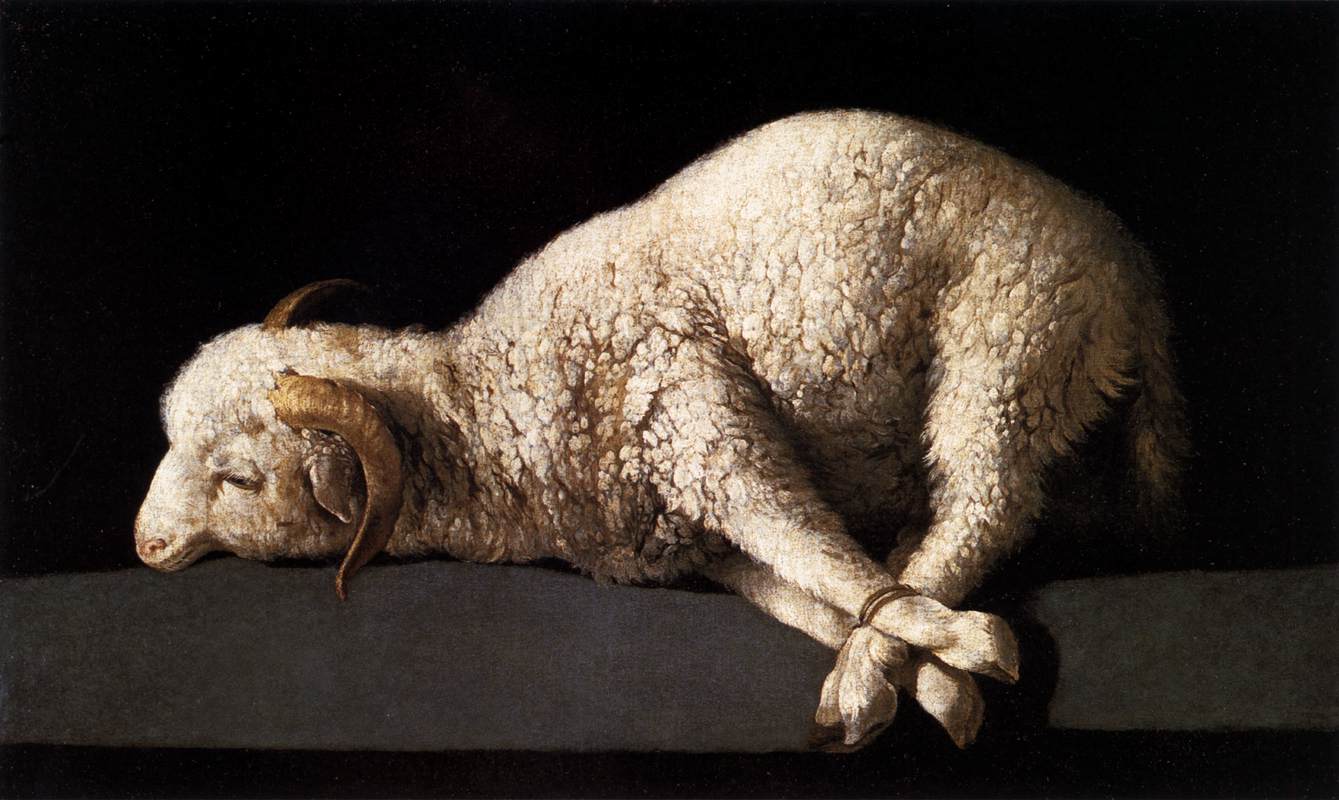
Agnus Dei

Agnus Dei
How G-d rules the world!
Showing posts with label Sermon. Show all posts

24 October 2010

Yelling at a Person Under a Bus, ‘Watch Out! You’re About to Get Hit By a Bus!’

                The title of this sermon is Yelling at a Person Under a Bus, ‘Watch Out! You’re About to Get Hit By a Bus!’ It concerns the 14th chapter of the Book of Jeremiah which might very well be one of the most important books for our time.  Despite its importance, I believe a great deal of confusion surrounds our reading of Jeremiah.  The confusion grows out of resistance to its absolutely radical message: we, as human beings, can wound G-d, and there are consequences for causing divine damage.  The theology of Jeremiah flies in the face of the predominating theology that turns G-d into Superman and Jesus into Clark Kent, G-d’s everyman alter ego.  G-d’s superhero status originated with Israel’s false prophets and now emanates from pulpits everywhere whether it is Joel Osteen and the prosperity gospel or Richard Dawkins and his assault on theism.  The long and the short of it is this, G-d  When we read Jeremiah, we find a G-d who is entirely different. has faded away from being seen as the creator who is intimately tied to creation, and instead is seen as a hero out of old western films: killing the bad guys and rescuing the innocent.
Jeremiah 14
                If you do not already, please open up Jeremiah 14 (or click here: http://bible.oremus.org/?ql=154975713).  I want to work through it as quickly and as extensively as possible.  What we have in these verses is a dialogue occurring between Yhwh, Jeremiah, and the people of Judah.  The people feel abandoned as they struggle through a drought and war; Yhwh feels abandoned by the people who Yhwh established a covenant with so long ago; and Jeremiah feels alone as the only prophet proclaiming destruction instead of peace.  This dialogue opens with an image of Judah in distress for the lack of water and food.
                At the chapter’s outset, Judah is in dire straights.  No one has water.  The word commonly translated as “cisterns” or “wells” in v. 3 actually refers to the irrigation canals dug by farmers.  The elite people of the cities are at their last resort.  They have sent their servants to the last possible place to get water, and they are ashamed of stooping so low in order to get what they typically have an abundance of.  That is why the farmers in v. 4, like the nobles, are dismayed, but unlike the nobles digging in the top soil for water for the first time, the farmers are not ashamed to be drinking from irrigation drains.  Nevertheless, everyone covers their head in sadness as they go thirsty.
                The poem moves from city to country and out into the wilderness.  Take note here how observant ancient peoples were of their surroundings.  Deer typically birthed fawns far from people in the heavily forested areas, but the doe has come to the fields without her young.  Clearly, even the wild animals are starving.  The donkeys are going blind.  What we know now is that blindness occurs due to a lack of vitamin A.  Grass contains “carotene” which is turned into vitamin A in a donkey’s internal organs.  A complete lack of grass could spell blindness.  The devastation is affecting everyone and everything.
                Judah raises a stink with G-d in vv. 7-9 because of the drought.  They put forth a formal lamentation.  First, they confess their sins.  They then frame their feeling of abandonment between two affirmations of G-d’s greatness.  They call Yhwh the “hope of Israel” in v. 8.  This word “hope” also, in Hebrew, means “pool of water”.  Thus it gives a double meaning in the face of the drought.  They wonder why G-d is not acting like Superman.  They even refer to G-d as “a mighty warrior”.  “Why is this mighty warrior not saving us,” they muse.  Unable to answer the questions, they reassure themselves at the end of v. 9.  The phrase, “Yet you, O Yhwh, are in the midst of us” most certainly refers to the temple where it was assumed G-d lived.  This is quite important.  If Yhwh left the temple, those who ruled the politico-religious realm would no longer be able to use G-d’s presence as a scheme of power.  They finish off then with the cry for G-d not to leave them with words that are reminiscent of the doe leaving her fawn.
                Typically, we would expect the response of G-d to the people’s confession and praise to be an extension of forgiveness.  Judah is Yhwh’s people, and they are deeply sorry after all.  We see no such thing.  Instead, G-d completely rails on them in vv. 10-12.  They are the ones who are strangers, who are confused.  Yhwh proceeds to tell Jeremiah not to pray for them.  The prophet’s role in the Ancient Near East was to intercede for the people in order to stem divine wrath.  Yhwh tells Jeremiah not to try it.  Judah’s other options, burnt and gift offerings, will be rejected by G-d, as well.  Yhwh, in v. 12, graphically describes how Yhwh will consume the people as the offering.
                Jeremiah responds in v. 13.  His response serves two purposes.  In historical context, he seems confused.  Is this really the word of Yhwh?  All the other prophets are claiming peace.  Yhwh clears it up for Jeremiah in v. 14, reassuring him that he is in fact hearing the word of G-d.  When we read v. 13 now with historical perspective as to what ultimately happened to Judah, we see Jeremiah defending the people.  Jeremiah intercedes on their behalf pointing out that all the prophets lie in the name of Yhwh making the people confused.  All the people believe peace will come because their prophets say it will.  This leaves Judah without the sense of repentant urgency necessary to stem the forthcoming disaster.  Jeremiah’s work is enough to get Yhwh to promise not to punish everyone, but rather, Yhwh will punish only the prophets and their followers.
                Yhwh commands Jeremiah to tearfully connect the destruction with the leadership of the lying prophets in vv. 17-18.  The poetry is beautiful even in English. We feel the wounded G-d’s tears overflowing out of the “Weeping Prophet’s” eyes begging the people to abandon the ignorant, wandering priest and prophets.  The problems encountered in the field and the city describes a scene of war and siege, respectively.  Apparently, Judah endured the fate of battle yet still trusted in the leaders who caused the death in the first place.
                Judah’s response in the form of another lamentation rends my heart and seals their fate.  They begin questioning G-d’s faithfulness.  Rightfully, they believe Yhwh struck them down.  The peace promised by prophets is nowhere to be seen.  Peace has not happened; people are still dying.  They admit their sins; they come so close to finally understanding when they make a demand.  Act, Yhwh, for your name’s sake.  They did the same thing 14 verses earlier, and we saw the result.  They want G-d to act for G-d’s sake? No! They want G-d to act for their sake, and they use the covenant and G-d’s honor to try to get it.  “We had a deal, Yhwh,” they say.  “You cannot let this happen.”  It is ironic.  They confess their sins and proceed to commit them again.  They want G-d’s help without G-d’s law, and they will blame G-d if they do not get it.  “You cannot let this happen,” they say.  And in G-d’s silence at the end of ch. 14, as Judah worships the rainmaker, the one they want to see end the drought, the death from war, and the hunger that has consumed them, as they wait for Superman, we find Yhwh, betrayed, abandoned, manipulated, and wounded, responding, “Yes, I can let this happen.”
The Text Today
                Is the Church under the bus?  This text shows us two images.  First, it shows a person (Judah) standing in front of a moving bus asking G-d to be the hero for G-d’s own sake.  Second, we see Jeremiah come onto the scene and tell the person to move after the bus wreaked its damage.  Let me posit this hypothesis. The Church in the United States is, at the very least, standing in front of the bus.  Our feet love to wander.  We are incredibly fantastic at the parts of Judah’s lamentation involving confession of sins and praising of G-d as being powerful.  We do it by the millions every Sunday in massive megaplexes and stadiums that serve as preemptive mausoleums where we wait to be massacred out of our comfortable middle-class lives and transported to some ethereal dimension where we will be blessed with wealth, perfection, gluttony, and eternal boredom.  The priests and prophets who build these temples from Joel Osteen to Bill Hybels to Rick Warren to Mark Driscoll convince us that G-d’s covenant, no matter how badly you chase other gods, is something that can never be unbound.  Well I am here to tell you that if we do not learn from Jeremiah, we will be living in exile before long.  That bus is coming pretty fast.
                Perhaps we already saw it in Europe. I think we all know of the loss of faith there.  Yes, in that way, we see a sort of reversed situation.  Instead of imperialist Babylon dragging off Judah, the colonized continents took the faith of empire-builders and proceeded to redeem it.  We have seen the shift over the past century.  90% of the world’s Christians lived in the global North at the commencement of the 20th century; by the 21st, the vast majority shifted to the global South.  It seems G-d moved after growing tired of our imperial impulses, making our country, our prosperity, and our way of life the highest gods of all.  Our way forward can no longer be with the Jim Wallises and Pat Roberstons of the world who seek to form and shape public policy as the way to show G-d’s love and power.  Our way forward is to realize the truth: we’re about toe get hit by a bus.  The only safe place is with G-d, who probably looks kind of like the crazy homeless guy on the corner.  We get to G-d by joining in G-d’s woundedness, loving and healing each other in divine and human community.

23 April 2010

Two Part Sermon Series on Revelation: On the Side of the Lamb Part 2

In Part 1, I introduced the central theme of Revelation and gave a little background.  The book "reveals" to us the life-changing truth of Jesus; that is, it reorients us toward viewing history from the perspective of the innocent, those slain by the powers that be.  Further, it claims that this is G-d's perspective.  Revelation accomplishes this task using language from 1st c. apocalyptic literature, the Hebrew Bible, and Greek astrological images.  Before I continue, I think it would be prudent to offer you a useful analogy in order to better explain how all these images in the book operate.

For us, the most common form of media comes in movies.  I brainstormed which movies best reflect Revelation's story-telling style.  There are many candidates: The Matrix, Dawn of the Dead, or the newly released Avatar. However, none seemed quite so fitting as Dr. Strangelove Or: How I Learned to Stop Worrying and Love the Bomb.  I do not know if you have seen Stanley Kubrick's Dr. Strangelove, but it is a an incredible movie.  The American Film Institute named it the 2nd greatest comedy of all time.  Dr. Strangelove is relevant to our discussion in this.  The movie portrays the U.S.'s leaders in the midst of the Cold War.  They appear to have complete control: a massive war room, B-52's ready to strike with tactical nuclear weapons at a moment's notice, the leading ex-Nazi scientist, and the most advanced technology.  As the movie progresses, we see that the Pentagon leaders are completely out of touch, totally irresponsible, and, in the case of the rogue general who orders a nuclear strike on the USSR, entirely insane.  We know for good fact that politicians and military leaders are most likely very responsible, sane people; nevertheless, Dr. Strangelove presents them involved in a situation where their activities are crazy.  This is identical to the behavior of the leaders in Revelation.  We know rightly that the Roman emperors had very good intentions.  They wanted to bring prosperity and well-being to the world, yet the cost of their pride in believing they were the ones who could bring peace and tranquility was a massive disparity between the rich and the poor; oppression of people who refused their imperial cult; a massive military which consumed tax dollars, land, and manpower (sound familiar); and a global hegemony not amenable to those who are different.

Thus, in the same way Dr. Strangelove presents admirable leaders as completely insane, Revelation shows them to us as beasts: hideous and evil.  It should be of no surprise to us, then, to see the same logic working in reverse.  If the "practical", "good" leaders are monstrous beasts because of their involvement with such an insane system, then the actual leaders, the ones who rule with justice and without compromise must do so in a manner entirely opposite to the beast.  Therefore, the one who is worthy to rule is not a destructive predator but an innocent, slaughtered Lamb.  It is to this Lamb I now turn.

The chapter of Revelation we read today, ch. 5, is our introduction to the Lamb.  Structurally, this chapter is incredibly important as it follows ch. 4 which is our introduction to the one who sits on the throne.  In ch. 4, we find G-d sitting on the throne of heaven surrounded by 24 other thrones and the 4 living creatures.  G-d reigns supreme in this heavenly court.  The chapter describes a normal scene of political power.  Just like today, with the president constantly guarded by secret service agents and surrounded by advisers and cabinet members, the Roman emperor hosted entourages of people.  Similarly, G-d in G-d's throne room has an entourage.  This entourage is fully subservient to G-d and G-d alone.  Those subservient to G-d are significant in their number and symbolic representation.  The 24 elders signify the 12 tribes of Israel plus the 12 apostles.  The four living creatures signify all of creation.  Four was a number representing the earth; thus the four living creatures represent the earth and everything on it.  They are a lion, considered the greatest wild animal; the ox, considered the greatest domestic animal; a human, considered the greatest living thing; and the eagle, considered the greatest living bird.  G-d is established here as the only one worthy of praise from both the people of G-d and all creation.  This praise is rooted in G-d's separate or holy nature (v. 8), G-d's eternalness (v. 10), and G-d's creation activity (v. 11).  Furthermore, John joins in the respect paid to G-d by not describing the one on the throne; rather, John tells only what the one on the throne is like: jasper and carnelian with an emerald rainbow around the throne.  In ch. 4 we can only know G-d by what John describes as occurring around G-d.  Lightning, thunder, and seven flaming torches which are the seven spirits of G-d surround and emanate from the throne.  Thunder and lightning conjure many Hebrew Bible texts in our minds, especially Sinai and the receiving of Torah.  Seven is a number which always means wholeness or completion.  That there are seven spirits of G-d implies the fullness of G-d's spirit(s).  All these things are important as they will resurface again in ch. 5.  Ch. 4 ends with the 24 elders claiming G-d's worthiness to receive "glory, honor, and power" (v. 11) since G-d created all things.  Keep this last part in mind as we proceed to ch. 5.

When ch. 5 begins, we are still in G-d's throne room. Held out in G-d's hand is a "scroll".  The word for "scroll" here is biblios, the same word from which we derive Bible.  It means "book".  The common translation "scroll" is misleading.  Held by the one on the throne in this scene is a fan-folded book.  These books commonly held imperial decrees.  The way in which they were folded made it possible to read only part of it by breaking one seal.  Again, seven seals implies completeness or wholeness.  This decree from G-d is the completeness of G-d's decrees or G-d's rule in the world.

Now, pay close attention to the language, a mighty booming angel asks who is worthy to open the book.  "Worthiness" does not have to do with moral worth but with social prestige.  For example, if the emperor handed out an imperial decree, an ordinary Joe-schmoe on the street would not be the one to read it, and certainly, only someone of high government status would be able to execute the decrees.  Hence, when no one is worthy to open the book, John cries.  G-d's kingdom decrees, it appears, will go unrealized.  This is a full frontal assault on imperial Rome and emperor.  Even though Caesar rules the whole "world" not even he is worthy to execute the plans of G-d by breaking the seals. Nor is a mighty angel worthy, so who is?

V. 5 answers the question.  Caesar is not worthy to open the book, but the king of Israel, the Lion of Judah, the Root of David, is worthy.  This worthiness derives from the Lion's conquering.  The whole verse is odd though.  The elder explains that David's Root has conquered, but who, how, when, and where this conquering happened is unanswered.  Thus, we only know why: to open the book.  The word "conquer" is the quintessential activity of the Lamb in Revelation.  Since our introduction to the Lamb's conquest is left open-ended, we cannot take this to mean violent takeover.  By implication, the conquering done late by the Lamb over the beasts must be read in light of the symbolic conquest mentioned here with no direct object.

Revelation 5.5-6 should stand out in our minds as two of the most important verses in the entire Bible. We cannot overstate the power of these verses.  Moreover, their magnitude lies in the questions they create, questions whose answers are both obvious and striking.

First, we must ask, where did this Lamb come from?  In v. 4, John is crying because no one and nothing in heaven, on earth, and under the earth could be found.  Suddenly, this Lamb appears among the elders and living creatures.  In ch. 4, John spent calculated efforts toward describing the throne room of G-d.  No Lamb was there.  Ch. 4 established G-d as ruler of all creation, yet nothing in G-d's creation was worthy to open the seal.  Where did this Lamb come from?  V. 13 gives us an idea: "To the one seated on the throne and to the Lamb be blessing and honor and glory and might forever and ever!"  The one on the throne, G-d, and the Lamb, Jesus, are worshiped in the same breath with the same words used to worship G-d in ch. 4.  Where did the Lamb come from?  G-d.  However, unlike creation which also came from G-d, the Lamb receives the same treatment as G-d.  By implication, Revelation shows us how early on Christians considered Jesus to be divine.

Second, why did the elder lie to John?  In v. 5, the elder has John (and us) anticipating either a lion or a king.  Neither would be surprising since there already was a lion and lots of royal-type people sitting on thrones in ch. 4.  Lions are vicious predators and David was an extremely violent king; to add onto this, the elder says the one coming to open the seals "conquered".  The dramatic effect, the intense juxtaposition should not be lost.  When we most expect a conquering, predatory warrior, we see, instead, a Lamb standing as though it has been slaughtered.  This is the Messiah's grand entrance!  This is how the one worthy to open the seals enters G-d's throne room: in a humiliated, defeated form.  The Lamb appearing where, according to even the people surrounding G-d day and night, a lion or king should be must absolutely blow us away.  It should make us double-take every time.  Here Jesus is revealed.  Moreover, Jesus reorients.  No longer should we look at G-d's decrees from the perspective of those who conquer like lions and kings.  Instead, we should be palpably realigned onto the side of those who stand before G-d as though slaughtered.

The following phrase locates the sevenfold spirit of G-d lodged within the Lamb reflecting a very early Trinitarianism.  The final verses contain the elders, the living creatures, and countless angels praising the Lamb climaxing with all creation praising both the Lamb and the one on the throne.  Yes, all creation, Revelation anticipates, will one day worship G-d.  What a joy it is to have a head start!

Now, we move to the question of what this teaches us.  First, the powerful and mighty are unworthy to execute G-d's decrees.  Instead, G-d's commands are realized in the hands of a dead, baby sheep who lives.  This means that we cannot hope for the deliverance of those who suffer to come at the hands of the powerful.  The salvation of humanity is packaged, not in good legislation and practical, rational leaders, but in the communities who choose to follow the Lamb as it carries out G-d's kingdom edicts.  Following the Lamb necessitates self-sacrifice, for this is the way the Lamb reigns and conquers evil.  Since v. 10 states we are to reign on earth with the Lamb, we can only assume that being slaughtered as means of conquering makes sense for us as well as the Lamb.

Finally, I would like to draw us back to my original analogy.  Dr. Strangelove ends with (spoiler alert) nuclear disaster.  The whole world is destroyed.  This is the logic of the beasts: death.  Revelation commits us to a hope.  When G-d rules through the self-sacrificial love of the Lamb, the beasts cannot win.  The oppressed will cry out for justice and they shall be vindicated.  The very nature of those who wish to rule in a way different from the Lamb, in a way which kills the Lamb, whether they be fascist, democratic, or monarchic, is the logic of the beasts: death.  The power of the Lamb delivers life.  So Revelation does not end in nuclear holocaust.  Instead it ends with new heaven and new earth.  In the end, G-d's kingdom brings life.

22 April 2010

Two Part Sermon Series on Revelation: On the Side of the Lamb Part 1

The Book of Revelation is an unwillingness to compromise.  To a society whose highest value is supposedly everything in moderation and bi-partisan, centrist politics, Revelation can be abrasive, for it presents to us a dissatisfied G-d and a Messiah who refuses to partake in the death-dealing prosperity of global empire.  Instead of locating themselves with moderate footholds to reach the greatest audience, we find G-d and G-d's Messiah overcoming systems of oppression and domination from the outside in.  This is why the interpretation of Revelation has been so incredibly messy.

Augustine of Hippo, perhaps the most well known theologian of all time, believed that the "1000 years" so famous in Revelation began with Jesus' resurrection; therefore, the entire medieval European community shook in trepidation at the advent of year 1000 as they waited for Satan to be set free.  Obviously, there was a sigh of relief when nothing happened.  Martin Luther admitted openly that he had no idea what Revelation was really trying to say, and hence, in whatever way anyone interpreted it was fine by him.  Tim LaHaye, Jerry Jenkins, and Hal Lindsey, on the populist level, convinced millions of people worldwide what the end time would look like with claims that we in fact live in them, defending themselves with the end times "script" of Revelation.  The book has contributed to endless speculation.

Catholics identified Luther as the beast; Lutherans said the beast was the Pope.  Hitler, Stalin, and nearly every president by one group or another has been labeled "the beast".  While I may not wholly disagree with these estimations, for anyone to conscript the imagery of Revelation into a module for identifying who specifically John had in mind when he prophesied about the beast or the number 666 is to misunderstand the nature of the prophetic and to deny Revelation's relevance to all Christians who came before us.  Folks, we will never be able to say with 100% certainty who exactly "the beast" is.  In doing so, we make ourselves into an elite group of people who have the privilege of being the ones John had in mind when he wrote Revelation.  If, then, we cannot identify all the symbols in Revelation on a 1-to-1 equivalency basis, how do we read Revelation?  How can we 21st century, middle-class, European-Americans (I preached this sermon to Evergreen Mennonite Church who are predominantly this demographic) make sense out of such a mysterious writing?

Basic Facts
When I say "apocalypse", we all have some common ideas in mind: the "world" has ended insofar as the structures, systems, governments, and human organizations that drive the gears of production and consumption are gone.  Apocalypse, however, is actually the Greek title of this book, and it means "to unveil" or "to reveal".  Ironically, Revelation has a tendency to obscure or to make things blurry.  I hope by the end of this sermon its message is a little more lucid.

Many people call this book "The Revelation of John", but quite clearly, it is nothing of the sort.  V. 1 states right off this is the "Revelation of Jesus Christ".  It is only fitting then that the main character is the Lamb who was slain.  Jesus shown as a Lamb has a vast array of symbolic background; it is the dominant image for G-d's Messiah in Revelation; and it is my favorite image of Jesus.

Though this is the Apocalypse of Jesus Christ, the book's author is none other than a man named John.  Many people claim this "John" is John brother of James, cohort of Peter, author of John the Gospel and 1, 2, 3 John, and one of the 12, but this is most likely not true.  The amount of expertise needed, particularly in the field of astronomy and astrology is hardly expected of a peasant fisherman like John son of Zebedee.  Moreover, just like it is today, John was an incredibly popular name.  Thus, we know very little about this John, but we do know a few things for sure.  John wrote from a tiny island off the coast of modern-day Turkey called Patmos.  Most likely, he was exiled there.  He was a Jewish Christian.  One of the oddities about Revelation is that it never explicitly quotes the Hebrew Bible.  Nevertheless, there are more allusions to the Hebrew Bible in Revelation that in any other book of the New Testament.  As a result, much of the imagery that would create and evoke powerful emotions is lost since none of us possess a knowledge of the Hebrew Scriptures like 1st c. Jewish Christians did.  The other unique feature of Revelation is that it does not use the Greek translation of the Hebrew Bible.  This is totally bizarre since that was the standard translation of the day.  Instead, the author appears to work out of a Hebrew translation.  Every other New Testament book quotes the Greek, but Revelation only alludes to the Hebrew.  It is said that John "spoke Bible".  He was steeped so profusely in the Hebrew scriptures that it was impossible for him to avoid this level of allusions.  It was in his blood.

Beyond being a Jewish Christian, John is also an astral prophet.  1st c. people firmly believed that events in the sky affected events on the earth.  They believed stars were people and planets were gods.  Even Christians believed this.  John was a person whose vocation was to observe the sky and use it to understand past, present, and forthcoming events.  As a prophet, the proclamation of the interpretation of these events was a service to the congregations.  Unfortunately, he was exiled to Patmos.  His statement that this vision came to him on the Lord's day (1.10), that is the day of worship, implicates that John's writing was his fulfillment of his prophetic vocation from afar.  Since he would naturally speak all these things to the congregations if he was present with them, we can only assume that this book was intended to be read aloud to the congregations.  Revelation was written to be read in large segments aloud to congregations of people.  The intensity of its message is only amplified by this style of reading.

Social Setting
More than just being acquainted with John, we need to have a brief but solid conception of John's social world.  The province of Asia Minor where the original churches who received Revelation resided was a critical and prosperous portion of the Roman Empire.  Technologically advanced, the cities in Asia Minor hosted medical schools, ship ports, textile industry, and incredible construction projects including one of the Seven Wonders of the Ancient World, the temple of Artemis/Diana in Ephesus.  What is more, Asia Minor was notorious for the promulgation of the imperial cult.  Most emperors did not demand to be worshiped as gods, but the people of Asia Minor praised them as such.  The first temple to Emperor Augustus was built in Asia Minor, and the coins circulated there showed how the Roman emperors were considered divine.

John reads and interprets the Roman Empire from the perspective of the Lamb who was slain.  Revelation's lens through which it interprets history is from under the blood of the innocent.  That the empire who claimed to bring peace to the whole world crucified the G-d of the universe as a Galilean itinerant preacher and miracle-worker scandalized John, and revealed to him the true nature of empire.  When Jesus rose again, he conquered the death-dealing, dehumanizing powers of the empire.  This is the revealed Jesus, the apocalypsed Jesus.  The revealed Jesus unveiled the empire's crime: legalized murder.  The revealed Jesus realigns perspective.  The slaughtered Lamb forces us to lose the viewpoint of the imperial, idolatrous systems of domination because systems like these are compromise.  Peace at the cost of killing G-d is no peace at all.  The Pax Romana is fraudulent; G-d alone can bring peace; and peace can only come through self-sacrificial love.

With all this in mind, John's vision becomes clearer.  The Roman empire becomes four warring horsemen destroying peasant people with violence and pestilence.  The emperors transform into beasts from the sea, and behind it all, evil itself, the fundamental enemy of G-d, drives the gears that make the imperial engine go.

What Does It Mean?
How then should we read?  Turning this book into an apocalyptic timeline risks paralyzing its explosiveness.  It will serve not as a manifesto for subverting the empire through self-sacrifice, but as an excuse to be complicit with the death-dealing powers of the empire since G-d will win in the end anyway.  The opposite problem of reading Revelation as a historical timeline that had cultural relevance then but not now also arrests the shattering effects of John's vision.  The book calls us to convert from being on top and repent of oppression.  It calls us to reorient ourselves onto the side of the Lamb that was slain with the positive belief that victory over the death-dealing powers can only come through such an orientation.  John puts us face-to-face with a G-d who does not share the throne, and when powerful people rise to a status in which they claim they are sovereign, only one thing can result: the death of the innocent.  Such immoral behavior in the name of progress, peace, and hope receives no toleration from G-d who locks up the beasts that possess the audacity to act with such hubris.  Meanwhile, we, the people of G-d are called to rescind our participation in this fraudulent peace.  Instead, G-d calls us to come and be a part of a different kingdom, a kingdom ruled by the Lamb where no more tears, sorrow, and yes, even death exist.

21 February 2010

An Anabaptist Renewal of Lent

Luke 4.1-13 is a difficult passage for me to read.  I have a history of being a slacker.  Sometimes I take pride in laziness, especially when I am rewarded for it.  One of my favorite stories to tell about this is from my Junior year of high school French.  The teacher absolutely loved me since I was a personable guy, and I took full advantage of this by indulging in a loophole in his grading system.  Anytime someone raised their hand to speak in French, he gave them 1 point of extra credit which was not calculated into the final grade until the end of the semester.  Needless to say, I spoke a lot of French that year.

As the semester began to end, I was teetering on the verge of a B with a 91%.  I procrastinated to the extreme on two projects that were due just before the end of the semester.  I had a workbook which I was supposed to be working all year and a large, fairly simple translation.  I stayed up very late the night before they were due, but I did not finish.  I handed in my workbook two-thirds complete and my translation three-quarters complete.  Combined, they were worth over a third of my final grade.  I felt defeated, lousy, and fearful.  I was going to get a B (maybe even a C) in one of the easiest classes I had ever taken, and my parents were not going to be happy.  A knot was in my stomach as I waited to see my grade the next week.  I knew I needed to tell my parents about it before they got the report card so I checked the grade posted outside the French room the day grades were up.  Lo and behold, I had not dropped from an A to a B.  I jumped from a 91% to a 103%!  My teacher factored in all my speaking during class as extra credit, and this propelled me from the grade I actually deserved to an A+.

Sadly, I later learned many of my friends in the class earned lower grades since they were unable to speak during class due to my outspokenness.  Also, I did not learn what I needed to learn because I rushed on my projects and left them incomplete.  This is what we encounter in Luke 4.  The devil is tempting Jesus to speak up in class so he does not have to do his homework.

In Luke chapter 3, Jesus receives baptism from his cousin John (v. 21), and afterward, the Holy Spirit comes upon him (v. 22).  Luke 4 picks up at this point after being interrupted by Jesus' genealogy.  Luke presents the setting: Jesus is being led around in the wilderness by the Holy Spirit (v. 1).  One of the most important parts of Luke is that it possesses the most dense and intricate uses of the LXX by any of the 4 gospels.  Immediately, the heritage of Israel should be conjured in our minds.  40 days in the wilderness aligns Jesus with Israel's 40 years in the desert (Deut. 1.34-40), Moses' 40 day fast on Mt. Sinai (Ex. 24.18), and Elijah's 40 day flight to Mt. Horeb (1 Kgs. 19.8).  Many want, at this point, to pit the devil against the Holy Spirit here, but nothing in the text suggests this.  If anything, the two are in collusion with each other.  The word used for tempt in v. 2 means more or less "challenge", and it is always directed at G-d or Jesus in the gospels.  It connotes a proving of oneself (if one passes the test).

In v. 2, the 40 days end and Jesus is starving.  The devil comes and offers a simple proposition.  This portion of the narrative should not be confused with Matthew's version.  In Matthew, the devil asks Jesus to turn stones into loaves (4.3).  The plurality connotes manna.  The devil, in Matthew, tempts Jesus to take on the role of a welfare king feeding all of Israel.  In Luke, the temptation is simpler: "If you are the Son of G-d, feed yourself."  We hear echoes of this later in the chapter in v. 23 when Jesus says to the people of Nazareth, "Doubtless, you will quote to me this proverb, 'Doctor, cure yourself'," and it comes up again when Jesus is on the cross while priests, soldiers, and the man dying next to him scoff, demanding that he save himself (23.35b, 36-37, 39).  Jesus did not come to feed, cure, or save himself.  He came to show us the Way into G-d's Kingdom, and stone into bread is insufficient.  An act of self-salvation is not a part of this Kingdom.  Jesus tells the devil, bread is not enough.

The next temptation is another we must not confuse with Matthew, for in Matthew, this is the 3rd temptation.  Looking at Matthew can really help us here.  Most people are used to thinking that the devil tells Jesus that the authority and glory of the kingdoms of the world belong to him, the devil.  However, only Luke mentions this.  Luke must be trying to indicate something by this addition.  Most read this with Constantinian eyes, assuming that G-d gave the devil the authority and glory of the nations.  This is unmerited.  Luke 2.1, which reads, "In those days a decree went out from Emperor Augustus that all the world should be registered," says who has authority over "all the kingdoms of the world" (4.5).  Caesar does!  Who gave the devil this authority?  Caesar did.  This becomes quite obvious when we read Psalm 2.7-8.  G-d says, "You are my son" and "I will give you the nations".  Since Jesus is G-d's Son, logically he expects to receive authority over the nations.  Bowing to the devil is not how Jesus is to earn this power.  Jesus cannot be the king of the world if he bows to the power of Caesar.  Thus, he refuses.  Instead, he so rattles the cages of the emperor that he is killed, and by the power of G-d, rises again, victorious.  This is the lengths to which Jesus' faithfulness takes him.

We saw a temptation to abuse Jesus' status to save himself, we saw a political temptation to expediently achieve the goal of bringing G-d's Kingdom, and finally, we see a religious temptation.  The Gospel According to Luke is always pointed toward Jerusalem.  It begins and ends there; starting at 9.51 Jesus sets out on a long ten chapter journey toward the Holy City.  We find a foreshadow of this journey here as the devil leads Jesus to Jerusalem.  Of the three, this is the most somber temptation.  Luke's all Christians of all times know that when Jesus gets to Jerusalem at the end of his journey, the highest part of the Temple, the priests, will, in fact, cast him down, but there will be no angels to protect him.  What we see clearly here is the devil suggesting that Jesus could avoid the crucifixion if he merely tests G-d's protection.  Jesus refuses to do this.  Instead, his choice is to trust that his death will result in his resurrection, whereupon G-d's Kingdom will be in its full glory.

Alas, the devil, not "defeated" but "finished", leaves until another opportune time.

What do we take away from this today on the first Sunday of Lent?  Though I have not been Anabaptist since birth, I was raised in the broader tradition of the radical reformation.  We, the radical reformers, have, for centuries, steered clear of the Church calendar, but gradually, we are making our way back toward it.  I believe this is a great thing.  It provides us more common ground with our liturgically-minded brothers and sisters.  In turn, this allows us to challenge their long outdated views on war, the Church's relationship to government, Baptism, etc.  What I think we have is a responsibility to put a prophetic critique on the dominant view surrounding the Lenten season.  Lent has become a time in which Christians give up a "vice" which is superfluous or mildly damaging to their well-being.  They do so in order to commiserate with Jesus' suffering.  If we approach Lent with such an attitude, we commit several major flaws.

First, we fail to recognize that only in a culture of extreme excess is it possible to sacrifice what is superfluous to ourselves.  Most people in this world do not have the luxury of indulging in what might be damaging or useless.  Second, we approach Lent existentially.  We do not give up our vices for the sake of others; we give them up for the sake of ourselves.  Finally, we look at Lent as temporal rather than permanent.

Jesus' temptation story addresses these problems head on.  First, Jesus' story begins in a place of scarcity and depletion.  Lent is therefore not a time of sacrificing a small piece of excess for a moment in time.  It is a season in which we thrust ourselves into scarcity so that our faithfulness might be tested.  Are we willing to quit earning easy extra credit and start doing our homework.

Second, Jesus is given the opportunity to make himself powerful, but he refuses.  The temptations Jesus rejects are rejected not for his sake but for others'.  During Lent, we should not rededicate ourselves to the Kingdom of G-d for the sake of our own salvation.  We should do it for the sake of others' well-being.  What is detracting you from loving your neighbor.  Perhaps, it is the temptation to indulge in the power and glory of the kingdoms of the world.  Perhaps, you fear the cross of caring for the vulnerable.  Refusing the devil's enticing offer is hard.  Lent is a time when we work extra hard to do this.

Third, Jesus is tempted 40 days in the wilderness, but it is the final 3 temptations that define his ministry.  After refusing them, he does not return to them.  That is, he does not worship the devil after rising from the dead.  Similarly, what we sacrifice for Lent should not be something we want to return on Easter Sunday.  Jesus resurrected; our bad habits should not follow suit.

Finally, Jesus gave up many things that appeared good: bread, authority, and rescue from suffering.  In short, he refused to speak in order to avoid his homework.  Are we willing to give up that which might be good to us?  Can we even identify the parts of life that appear good, but are in fact compromised by the devil's tempting.  When we accomplish this task and we rigorously work, by the leading of the Holy Spirit, to rid ourselves of these "good" things, we naturally look not at Lent, but we maintain our attention on the coming day of resurrection, Easter Sunday.  When those temptations are refused, we celebrate our own new life as we celebrate our Lord's!  No longer afflicted by the scourge of what appears good but is in fact a deceptive shortcut, we live in the glorious light of the resurrection with the hope and assurance that Jesus is King!  I pray we do so with courage and the guidance of the Holy Spirit.  Peace!

-ben adam