Agnus Dei
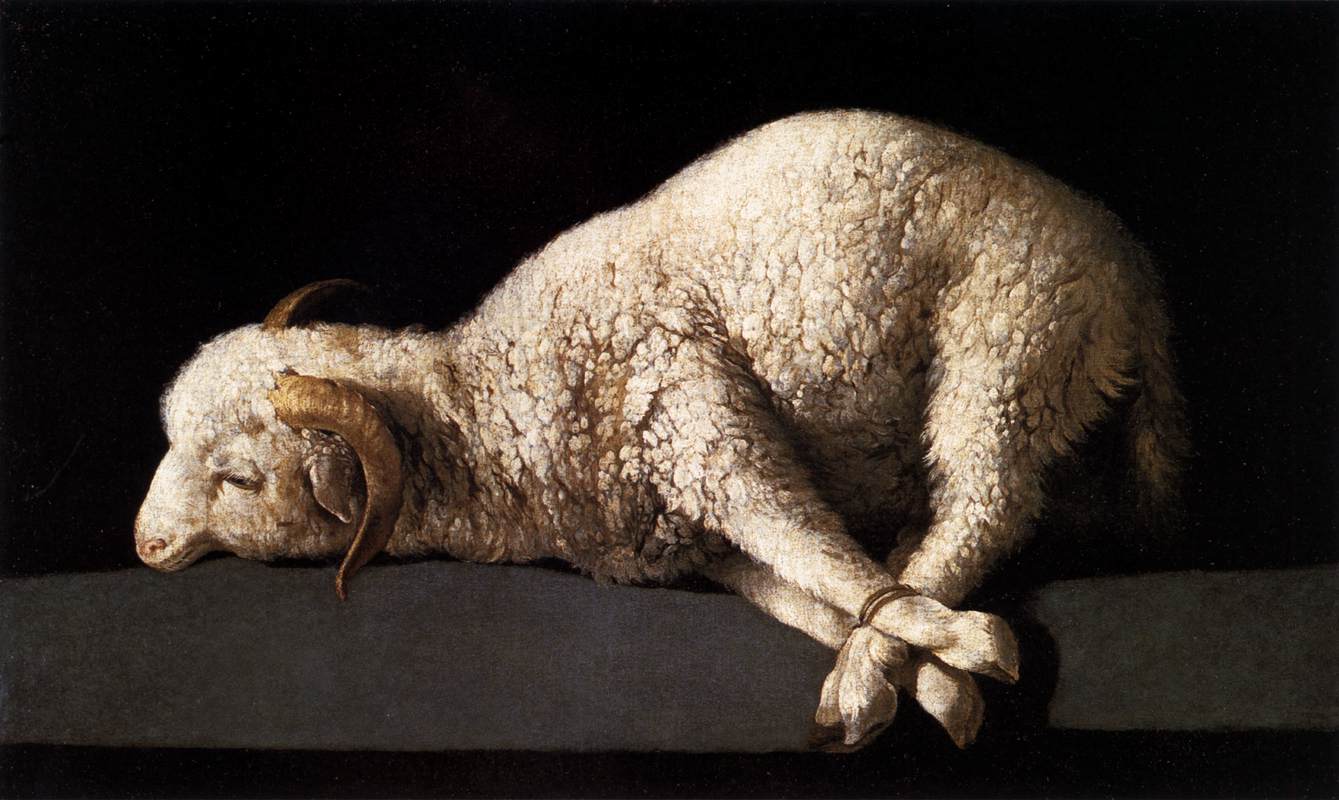
How G-d rules the world!
Showing posts with label Resistance. Show all posts
Showing posts with label Resistance. Show all posts
18 November 2010
Dreamgirls and the Subjection of People Through Strip Clubs Revised and Expanded
For all of you Seattle folks, I imagine you are like me. You are sick and tired of seeing “Dreamgirls” signs atop taxi cabs all around the city. They shine at night, illuminating giant pink letters over the top of a platinum blonde’s open mouth. Or perhaps you see the brunette in leather, reclining seductively on some invisible cushion. Whichever it is, I hope that you, like me, are weary of seeing such blatant eroticism on display. As I move into my critique of this advertising campaign, I want to first be sure that I do not give into a very obvious androcentric temptation. Too quickly, people assault strip clubs as marriage breakers and places that tempt men. Oftentimes, the critique of strip clubs is focused on men and their perversion or infidelity as well as demonizing the women who work at such joints. Instead, I want to look at the women and the men as victims in order to move blame away from the participants and into a sick and demonic society.
Since I have never been to “Dreamgirls” or any strip club for that matter, I will simply launch my critique from the wording on the signs. Each sign reads with this:
“DREAMGIRLS: Seattle’s Newest Gentleman’s Club”
Let us break down this sign bit by bit.
First, to state the obvious, it is an ad for a place where there are nude or scantily clad women on display for men (or women) to observe. This place where women are displayed is immediately identified as a “Dream”. Dreams are places where events occur without any of your control. Anything can happen in a dream, and when you wake up, there are no consequences. It does not matter if you killed someone or if someone killed you; a dream has no real life ramifications. Thus, at first glance, this sign espouses a lie. It implies that your participation and visitation at the place will cause no damage or good. In fact, it separates the confines of the club from everything outside of it. Nothing, not your psyche, not your physical body, not your spirit, not your marriage, not your platonic relationships with women, not your relationship with your female relatives, will experience any ramifications from entering. Men receive a lie in order to tempt them into the club.
Men become the victims of a falsehood. If we ask them to be discerning, then they are truly being deceived. The club promises what it cannot give: nothing. This “nothing” includes sexual pleasure, but more importantly, it grants men a seat of power. As the ones to be entertained, they demand what they want to see. The women who supply it, offer only themselves to fill the demand. While it costs the man nothing more than money, it costs the women to become objectified commodities for male consumption. “Nothing” appears harmless, yet it promises everything! What does it promise? This is where the women come in.
Two contrasting gender titles jump off these signs: “GIRLS” and “man’”. Who is a girl? A girl is young; she is innocent; and she is a female. Who is a man? A man is established; he is older, perhaps 25 at the youngest; and he is a male. Add two adjectives, “DREAM”, which we already discussed, and “gentle” and the contrast goes even higher. While “dream” signifies inconsequential, wonderful mystery, “gentleman” connotes a grounded, pleasant, respectable person who earned such a title based on how he is. The men are flattered while the women are mislabeled. The sign creates an authoritarian relationship. As elder and respected, the “men” grasp power over the “girls”. “DREAMGIRLS” promises the men power at the expense of the women.
At a fundamental level, the men caricature the women. This adds to the lie. “Dream” comes across with a double meaning. Caricatured as a “Dream”, the connotation is one of perfection. The phrase carries the same undertones as one's “dream car”, “dream house”, or even “dream mate”. What does one want beyond all other things? The answer lies in the dream. The title “DREAMGIRLS” equates the women with desire, but the desire brings only external observation and fantasy. Their humanity is removed, and they become an object much like a car, house, or any other possession that sits loftily out of reach. No longer do the women act as humans; the fantasy of desire from “gentleman” has objectified them. Objectification leads to crimes much worse.
The power dynamic reveals itself through the language used: “men” and “girls”. One is subject; the other is object. The subject-object roles dehumanize the women who work there and empowers the men who watch. This brings into question the entire business model of the operation. The owners provide a commodity. These objects are perfect, inconsequential, fulfillment of desire. I believe it pertinent to note at this juncture that the language excludes a relationship between two consenting adults. The women represent the object of the subject's desire thus removing her volition in the exchange. The objectification permits a disparate level of power. Mainly, it removes power from the women (consider the upper-class sex-industry workers who have the freedom to choose their patrons in comparison to a pole-dancer who must endure the general public). The language reveals this removal of power. “Girls” are always subject to the power of “men”. “Gentlemen”, which implies some form of nobility, possess elevated, socially permitted power over “girls”.
In most societies, we forbid sexual encounters between men and girls. The girls are vulnerable and impotent to protect themselves from unwanted sex imposed upon them by men. Therefore, we cannot dance around the honest truth: the linguistic power dynamic of “DREAMGIRLS: Seattle's Newest Gentleman’s Club” encourages rape through the empowering of an already powerful group and the objectifying of women and their bodies. This is why it is tempered with “DREAM”. At “DREAMGIRLS”, one can rape girls without any consequences. The women are turned into young girls, and the men are encouraged to commit sexual acts with them all the while maintaining respectability and the women maintain innocence. Quite obviously, this is impossible. Problems arise when fantasy becomes reality, when men wake up from the dream and realize it was real. How do we solve the problem? How do we end a world with “DREAMGIRLS”?
We require a societal shift. Using the “DREAMGIRLS” signs, we can observe the norms. What strip clubs represent is a form of puritanical sexuality. They indicate what a culture believes sex should be like. Unfortunately, sex requires trust, vulnerability, and emotion. What would sex be like without these things? A strip club shows us. What does society want from sex? First, it wants no consequences. Second, and more importantly, it requires, from women, virginity and innocence. Of course, these women spend their days taking their clothes off. Such an expectation of them is impossible. That proves the point. The fantasy of society is virginal, young women having sex with aged, respectable men. This puts the power into men’s hands. This is the worst expectation of all. Society expects sex to derive from the power of men. It refuses female sexuality as autonomous and requires it to be subject of male sexual desires. At “Dreamgirls”, men are the adults, the strong, and the respected subjecting the young, innocent girls to their sexual fantasies. How do we change this?
Primarily, we need to remove virginity and innocence as the highest value for women. This should not be replaced with eroticism and sexual experience as the ideal. That would only cause the same problem. Instead, we need to equalize women and men. The high virtues for women should be respectability, accomplishment, establishment, etc. The same connotation of gentlemen should come into our minds when we think of great women. In this, we must liberate female sexuality. We cannot accomplish this by encouraging unfettered promiscuity. Instead, encouragement of men and women (this also applies to couple in same-sex relationships) to be in equitable sexual relationships needs to replace the power experienced by men and the submission of women. We must be empowered for each other rather than over one another. Also, we need to change the categories for men. Men who look for young, innocent women, whether it be for dating or for flings, need to be seen as what they are: predators. We can no longer equivocate sexual desire expressed through pure indulgence as anything other than violence against women. Sex cannot be seen as something to exert power in; rather it is an exercise between equals. In order to change male experience of sexuality, we must encourage men to step out from their experience into the sexual experience of women. I do not mean we should pay back men for their historic violence. We should educate men about how women feel and express sexual desire.
Ending the violence will mean men can no longer romanticize about pure, virginal women. That is violence. It gives no respect to women and their sexual desires. Such fantasy accomplishes the opposite of its intent: it rapes rather than respects. Moreover, we need to tell the “DREAMGIRLS” of the world that we do not want their misogyny. They can go fuck themselves. Maybe that will teach them the importance of sex between equals. Peace!


15 August 2010
04 June 2010
Coping With Identity and Place: Resistance as a Way of Life
Right now, I am sitting in a coffee shop. This is no ordinary Starbucks; this is a dyed-in-the-wool coffee roaster. From my vantage point, I can watch two casually-dressed, scruffy-faced fellows load coffee beans into a large roaster which slowly churns the beans as they cook. They then transfer them into bags which they label, seal, and box. One of the large burlap bags from which they take their beans is labeled in all caps "Product of Colombia." In a way, the bag has been staring at me for the last hour or so. It discomforts me.
When we were in Colombia, we were told the coffee there was terrible. Not being a coffee drinker myself, I took people's comments at face value. It was a shocking reality. Colombia's coffee reputation precedes itself as being a prime locale from which coffee derives. Even I knew that. Juan Valdez hails from Colombia, and it only seemed natural that, in country, the coffee would be superb. It isn't, and there is one reason why.
I read on the plane back to the States that the U.S. is by far the world's largest coffee consumer. Based on no evidence whatsoever, I am going to go so far as to say that Seattle is, per capita, the greatest consumer of coffee in the U.S. Even if this is completely false, a lot of people drink a lot of coffee in Seattle. Now, more than a week after I left Colombia, I am facing a bag of quality Colombian coffee in one of the most coffee-saturated cities in the world. There is a major disconnect here.
The issue is no longer free trade versus fair trade. The issue is a society who thinks it is entitled to the wealth and resources of others. When the resources indigenous to a region become a scarcity, something has gone awry. Coffee consumption might be the best measure of this problem. For all its liberal rhetoric, Seattle leads the way in majority world exploitation or, at the very least, robbery. Herein lies the problem with the liberal agenda. It wants reform. This agenda looks at the current system with affirmation. Liberals then work to change the rhetoric and the people within the system. They redefine the family to include same-sex couples, they elect non-white leaders, they provide jobs for women, and demand a minimum wage. They do this in the name of the system's highest values and virtues, "equality", "freedom", and "opportunity". The system accepts their reforms, and it return, it provides them with what they want: abundant coffee, luxury condos, "green" cars, fair trade foods from around the globe, and the latest styles of textiles. In the end, they end up stealing coffee from Colombians as billions of people worldwide suffer for the sake of conscionable products.
In the end, the liberal agenda has been fighting the right battle on the wrong field. Since they accepted the basic tenants of the system, their reform has done little more than put a different face on the same monster. Meanwhile, they bow down to the monster in gratitude for its delivery of consumable goods. Life lived for the creation of a truly new world requires one rejects the system, seeks to deconstruct it, and rebuilds within its ruins. The new way of being pays no homage to the imperial monsters of neo-liberalism and capitalism. Instead, it embraces diversity without demanding satiation. It looks not beyond its own limited reach, and it is content with what it produces. This is resistance at its greatest pinnacle: when it becomes very, very small. It is time to reject this economic system outright, even if it costs us the benefits of good tasting coffee.
When we were in Colombia, we were told the coffee there was terrible. Not being a coffee drinker myself, I took people's comments at face value. It was a shocking reality. Colombia's coffee reputation precedes itself as being a prime locale from which coffee derives. Even I knew that. Juan Valdez hails from Colombia, and it only seemed natural that, in country, the coffee would be superb. It isn't, and there is one reason why.
I read on the plane back to the States that the U.S. is by far the world's largest coffee consumer. Based on no evidence whatsoever, I am going to go so far as to say that Seattle is, per capita, the greatest consumer of coffee in the U.S. Even if this is completely false, a lot of people drink a lot of coffee in Seattle. Now, more than a week after I left Colombia, I am facing a bag of quality Colombian coffee in one of the most coffee-saturated cities in the world. There is a major disconnect here.
The issue is no longer free trade versus fair trade. The issue is a society who thinks it is entitled to the wealth and resources of others. When the resources indigenous to a region become a scarcity, something has gone awry. Coffee consumption might be the best measure of this problem. For all its liberal rhetoric, Seattle leads the way in majority world exploitation or, at the very least, robbery. Herein lies the problem with the liberal agenda. It wants reform. This agenda looks at the current system with affirmation. Liberals then work to change the rhetoric and the people within the system. They redefine the family to include same-sex couples, they elect non-white leaders, they provide jobs for women, and demand a minimum wage. They do this in the name of the system's highest values and virtues, "equality", "freedom", and "opportunity". The system accepts their reforms, and it return, it provides them with what they want: abundant coffee, luxury condos, "green" cars, fair trade foods from around the globe, and the latest styles of textiles. In the end, they end up stealing coffee from Colombians as billions of people worldwide suffer for the sake of conscionable products.
In the end, the liberal agenda has been fighting the right battle on the wrong field. Since they accepted the basic tenants of the system, their reform has done little more than put a different face on the same monster. Meanwhile, they bow down to the monster in gratitude for its delivery of consumable goods. Life lived for the creation of a truly new world requires one rejects the system, seeks to deconstruct it, and rebuilds within its ruins. The new way of being pays no homage to the imperial monsters of neo-liberalism and capitalism. Instead, it embraces diversity without demanding satiation. It looks not beyond its own limited reach, and it is content with what it produces. This is resistance at its greatest pinnacle: when it becomes very, very small. It is time to reject this economic system outright, even if it costs us the benefits of good tasting coffee.
Subscribe to:
Posts (Atom)