One of the reasons I decided to join the Mennonite Church was its emphasis on peaceableness. More than the Evangelical Friends Church which I grew up in who focus on traditional evangelism which relies more on apologetics than action, the Mennonites have created many programs, books, curriculum, and everyday opportunities for its members to actively engage in peaceable and nonviolent activity. Mennonite Central Committee, Mennonite Conciliation Services, International Conciliation Services, and Christian Peacemaker Teams, to name the major arms of Mennonite peacemaking, can be found all over the world working to disseminate violence, oppression, and injustice in a variety of ways. I thank G-d for this, and in no way do I want this to end. Nevertheless, I am dissatisfied with it, and here is why.
When I first learned about the early Anabaptists, they mystified me. At the time, and still currently, I believed strongly that Christians need external identifying markers which display whose kingdom they belong to. Logically, these markers would be simple dress, plain living, loving attitude toward all people, operational practices of forgiveness, and dissension toward the state. The Anabaptists fit this mold perfectly, and the Mennonites are the direct descendants of the Anabaptists. Naturally, for reasons that just the above, I joined them. I partook in their practice of adult baptism. In two days I leave to work with Christian Peacemaker Teams, and I have applied to work as a pastor in the Mennonite Church. I have become a decent Mennonite in my own estimation, yet the baggage that comes with committing oneself to the Church (and it is the reason why I believe people need to be in Church) is the onus of responsibility for those within the Church. Thus, for example, whether we like it or not, the Catholic priest scandal effects us, and we are responsible for them. I am responsible for the Mennonite Church. This is the problem I see.
The early Anabaptists were killed in droves. Their martyrdom resulted from the incendiary practices I mentioned above. They lived in the middle of Christendom where "everyone" was a Christian, yet they claimed with reckless abandon that Christian faith could not be so oppressive, violent, and extravagant. Following G-d meant forgiveness, peace, and simplicity. Moreover, it meant G-d and G-d alone is the ruler of the world. Therefore, in there system of princes, barons, and Holy Roman Emperors, only G-d's rule mattered. Essentially, Anabaptists declared the state illegitimate, and since the state does not bear the sword for nothing, they were massacred. Since they believed G-d ruled the whole world, G-d loved even those who put the Anabaptists to death. Their commitment to nonviolence spawned from their belief in G-d's overarching sovereignty and love. This came along with simple living, distinctive dress, and many other practices which now seem all but forgotten by all descendants of the Anabaptists except the Amish. In short, the Mennonite practice of peaceableness was salvaged from Anabaptism and elevated into our consciousness as the distinctive Mennonite and Christian practice.
Why has pacifism become the defining belief of Mennonites? Why is our insistence on believer's baptism, simple living, radical dissension toward the state, and forgiveness no longer causing the waves they once did? These are the questions of a somewhat dissatisfied Mennonite who joined the Mennonite Church expecting one thing and finding another. I am going to attempt to answer the first as a way toward the other.
When the Anabaptists suffered massive amounts of persecution under the hand of German princes and other feudal lords, they became more and more sectarian as they became persecuted out of society. They kept to themselves and lived in simple ways upon the land. They earned the nickname "The Quiet in the Land". They worshiped and lived without much interaction or association with the outside world they found to be sinful and corrupt. In the early 20th century, with the advent of World War I leading World War II, the question of patriotism and commitment to a government deeply entrenched in conflict was at the tip of everyone's tongue. Mennonites, who dared not pledge their allegiance to a flag or recite the national anthem, became a scourge in the eyes of the war-driven nation. The draft ripped "The Quiet in the Land" from their homes and coerced them into serving in various capacities. Suddenly, the Mennonites were no longer able to keep quiet and to themselves. Engagement with the violent infant empire became necessary.
Many men returned from their conscripted service changed. They brought back a new perspective, and the Mennonite emphasis on peaceableness no longer remained under the shackles of inaction. Pacifism grew into nonviolent direct action against those who oppress others with the sword. Requisite in this new perspective was a greater interaction with those outside Mennonite circles. Consequently, Mennonites compromised their own distinctive practices in order to become peacemakers. The Vietnam War only exacerbated the issue. As young men faced a draft once more, they came into a head-on collision the possibility of being forced to fight and kill other people in the name of a country attempting to usurp the throne of G-d. The Mennonite's refusal to do this centralized pacifism as Mennonite distinctiveness. To be Mennonite meant pacifism.
The reason Mennonite equaled Christian pacifist did not derive from a holistic Church experience. It derived from men's fear of being drafted. In a way, men have been the sole producers of Mennonite belief. Peacemaking and pacifism came into the forefront from male experience. Peacemaking is not bad, but we have thus far let it override our original ideals. I believe if we look closely, it might even infringe on what women would like to see in the Church. Certainly, many Mennonite women I know affirm peacemaking, but could they in fact have their own experiences to contribute to the discussion that would help us be G-d's people in the world beyond simply peaceable activity? Perhaps, with a reduced patriarchy we could recuperate some of our original distinctiveness, or perhaps, we could claim new practices rooted out of the controversial belief that G-d is sovereign and loving. I do not want the end of peacemaking, but I do want the input of female voices. Up until now, male voices have drowned out all others with a cry for peace. The cost has been a loss of identity and a confusion as to who peace is made for. I believe it is possible for us to become the Mennonites, not of old, but of new without forsaking our roots. Have we forsaken them? Maybe not yet, but soon, they will be all but forgotten. I pray we can once again be the persecuted faithful trying to spread G-d's love in the world. Peace!
Agnus Dei
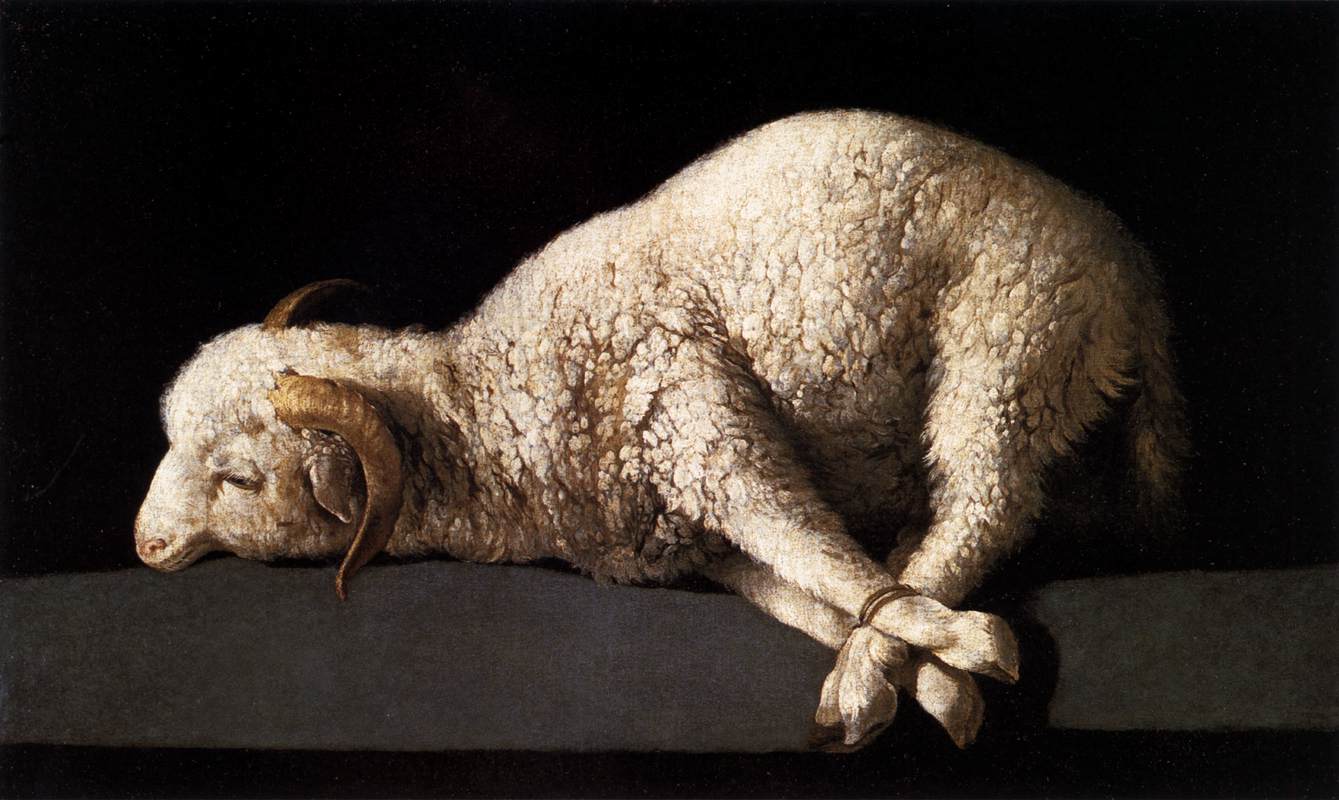
How G-d rules the world!
Showing posts with label Pacifism. Show all posts
Showing posts with label Pacifism. Show all posts
10 May 2010


26 February 2010
Reflections on Walter Wink
On Monday this week, I read, from cover to cover, Walter Wink's The Powers That Be. I meant to read it for some time now. Since N.T. Wright populates my entire reading list (I have finished five of his books since December), I decided to interrupt my Wright project with a little liberal theology, and I must say, I loved it. For the past few days, I reflected on this work, and these are my first few impressions about it.
This book represents a simple summary of Wink's The Powers Trilogy. Essentially, Wink distilled his scholarly work into an accessible volume for laypeople. He fulfills what my professor Dr. Rob Wall calls his responsibility to scholasticism and to the Church by doing this. I appreciate his efforts.
First and foremost, Walter Wink is an activist. He makes this very clear by telling stories about his days in the Civil Rights Movement in the '60's and his work against South African Apartheid. Like all writers, Wink responds to the problems he sees in current systems. More precisely, he writes to give theological weight to the solutions of these problems. With activism as his platform and theology as his instrument, Wink argues for the Church to commit itself to complete non-violence as a centerpiece of its faith statement. The lines of his argument are as follows:
The main problems Wink encounters derive out of his activist stance. He concerns himself with what stands in the way of the effective liberation of those who suffer. To Wink, the barrier to liberation is, what he calls, The Domination System. The Domination System is nothing new and can be seen all the way down through history whenever one group of people oppresses another for the sake of greed and self-interest. Wink realizes The Domination System is an evil, demonic animal which requires sustenance. The food of this beast grows in the corresponding corollary to The Domination System: The Myth of Redemptive Violence. The Myth of Redemptive Violence provides The Domination System with a narrative that can be reproduced in an infinite number of ways which convinces all involved in The Domination System (oppressor and oppressed alike) that without The Domination System the world would collapse and only the violence perpetrated by it can save us from this fate. The Myth looks roughly like this: a powerful being or system has caused harm or distress to a certain other being or group; from within the oppressed group, a powerful being or system arises to defeat and kill the oppressor, ending the reign of terror; as a result, the victorious protagonist becomes the ruling victor who creates a space in which the liberated can live free and in harmony; but eventually, the once righteous liberator becomes the dominating oppressor, beginning the cycle all over again. This Myth, seen from the Babylonian creation myth to today's children's cartoons, maintains silent ubiquity by coercing its adherents into believing it is normative. This omnipresence, Wink argues, is so pervasive it even infiltrated the way in which ancient Hebrews conceived of G-d; thus, it produced vast amounts of violence in the Hebrew Bible as the will of G-d. Jesus interrupts this Myth, and exposes it for what it really is: legalized immorality. He paints Jesus in an activist light as one who courageously revealed the truth about the one true G-d who has no part in The Domination System. Oppressive structures killed him for his insolence, and the early Church only half-way understood his purpose.
Hope, for Wink, in the face of The Domination System, comes in a two-step process. First, Wink holds the worldview that spirit infuses everything. From the Pentagon to a preschool, spirituality mediates within all structures. Thus, the spirituality of everything can, as all spirits can, be redeemed. Some of these things which can be redeemed, such as the law, need simple or complex recreation; some others, such as Nazism, sexism, or racism, require total abandonment. Our first step in redemption is clothing ourselves in what Wink deems an "Integral Worldview". Once we recognize this worldview to be the case, the second step in the process of redemption occurs through Divine and human collusion manifested as direct non-violent action against The Domination System. This, after all, was what Jesus did and what later Christians would fail to understand as they drifted back into oppressive, demonic structures.
My reaction to Wink's argument is both positive and negative. First, I fully affirm his view of a ubiquitous system of dominance that oppresses others for its own gain and sustains itself through the telling and retelling of an indoctrinating myth that convinces people of its indispensability. Furthermore, I 100% agree with the conclusion concerning non-violence. If we employ the logic of the Myth of Redemptive Violence against oppressors, we simply insert ourselves into the cyclical destruction of The Domination System. Meanwhile, we will fool ourselves into believing we are creating freedom or newness (just as the Myth prophesied we would). Hence, the only conceivable way to escape the Myth's all-encompassing hold is to step outside its operating parameters and do what it least expects: non-violence. Jesus, in my perspective, demonstrated this way of life in the most exemplary way. Wink and I cohere at this point. Finally, I share Wink's Integral Worldview. In general, Wink's largest conclusions are those that I affirm.
My dissension with Wink comes in his nuances. Primarily, we disagree in the extent to which The Domination System must be abandoned. He states clearly Nazism represented a spirit which should not be redeemed but abandoned. Whether or not you agree with his worldview, nearly everyone would agree with him on this point. Nonetheless, the government in the U.S., which has committed genocide against dozens of tribes, afflicted entire people groups under slavery and then Jim Crow, cripples the poor beneath the military-industrial complex, and fights multiple explicit and secret wars around the world, belongs in the category of redeemable which he makes clear by insisting he is a devoted patriot. I cannot agree with Wink here. If the purpose of the nation-state exists to defend its artificial borders from would-be assailants, we can see, by observing the U.S. and its hyper-militarized fetish, where such logic takes us. Nationalism and the good of the state must be abandoned. Subversive love of G-d and neighbor must replace it. Secondarily, Wink's biblical scholarship is inconsistent and jumbled. He writes off the Epistle to the Hebrews as complicit in The Domination System, yet he maintains the authority of some Pauline texts. He exegetes gospel passages, yet he limits their interpretation to his own agenda. As a result, Jesus looks less like G-d's decisive act in history to deal with sin (or The Domination System) in its fullness via non-violent activity and more like a failed social activist like Martin Luther King Jr. or Ghandi who at least understood what the latter two had in mind during their movements. Consequently, he denies the Trinity, and damages his argument in the process. Even though I still agree with his final conclusion, by refuting Jesus' divinity, Wink only allows Jesus to be one who teaches us how G-d is. Instead, by holding Jesus as the second person of the Trinity, we see, in his non-violent, direct action against the powers that be, the very way in which G-d chooses to reveal G-d's self. Not only, then, would this add theological substance to Wink's argument; it would add an ethical mandate for Christians to follow suit.
Finally, Wink believes the future of Christianity does not lie in debates about salvation and justification but in our ability to live out G-d's all-embracing love through peaceable means. I believe this to be half true. All the bickering about who is in and who is out creates a dynamic in which we forget Jesus is Lord, and we recreate him as life-jacket. Jesus is the King, and it is time we started living by his kingdom edicts. However, we must have faith that Jesus is Lord. Faith and obedience are therefore two sides of the same coin which is the Gospel.
How we live this out will eternally be under argument; Wink gives us a useful guide tool. The Church's days of domination are over. Time has come for us to pick up our crosses and follow the Lord. Peace!
-ben adam
This book represents a simple summary of Wink's The Powers Trilogy. Essentially, Wink distilled his scholarly work into an accessible volume for laypeople. He fulfills what my professor Dr. Rob Wall calls his responsibility to scholasticism and to the Church by doing this. I appreciate his efforts.
First and foremost, Walter Wink is an activist. He makes this very clear by telling stories about his days in the Civil Rights Movement in the '60's and his work against South African Apartheid. Like all writers, Wink responds to the problems he sees in current systems. More precisely, he writes to give theological weight to the solutions of these problems. With activism as his platform and theology as his instrument, Wink argues for the Church to commit itself to complete non-violence as a centerpiece of its faith statement. The lines of his argument are as follows:
The main problems Wink encounters derive out of his activist stance. He concerns himself with what stands in the way of the effective liberation of those who suffer. To Wink, the barrier to liberation is, what he calls, The Domination System. The Domination System is nothing new and can be seen all the way down through history whenever one group of people oppresses another for the sake of greed and self-interest. Wink realizes The Domination System is an evil, demonic animal which requires sustenance. The food of this beast grows in the corresponding corollary to The Domination System: The Myth of Redemptive Violence. The Myth of Redemptive Violence provides The Domination System with a narrative that can be reproduced in an infinite number of ways which convinces all involved in The Domination System (oppressor and oppressed alike) that without The Domination System the world would collapse and only the violence perpetrated by it can save us from this fate. The Myth looks roughly like this: a powerful being or system has caused harm or distress to a certain other being or group; from within the oppressed group, a powerful being or system arises to defeat and kill the oppressor, ending the reign of terror; as a result, the victorious protagonist becomes the ruling victor who creates a space in which the liberated can live free and in harmony; but eventually, the once righteous liberator becomes the dominating oppressor, beginning the cycle all over again. This Myth, seen from the Babylonian creation myth to today's children's cartoons, maintains silent ubiquity by coercing its adherents into believing it is normative. This omnipresence, Wink argues, is so pervasive it even infiltrated the way in which ancient Hebrews conceived of G-d; thus, it produced vast amounts of violence in the Hebrew Bible as the will of G-d. Jesus interrupts this Myth, and exposes it for what it really is: legalized immorality. He paints Jesus in an activist light as one who courageously revealed the truth about the one true G-d who has no part in The Domination System. Oppressive structures killed him for his insolence, and the early Church only half-way understood his purpose.
Hope, for Wink, in the face of The Domination System, comes in a two-step process. First, Wink holds the worldview that spirit infuses everything. From the Pentagon to a preschool, spirituality mediates within all structures. Thus, the spirituality of everything can, as all spirits can, be redeemed. Some of these things which can be redeemed, such as the law, need simple or complex recreation; some others, such as Nazism, sexism, or racism, require total abandonment. Our first step in redemption is clothing ourselves in what Wink deems an "Integral Worldview". Once we recognize this worldview to be the case, the second step in the process of redemption occurs through Divine and human collusion manifested as direct non-violent action against The Domination System. This, after all, was what Jesus did and what later Christians would fail to understand as they drifted back into oppressive, demonic structures.
My reaction to Wink's argument is both positive and negative. First, I fully affirm his view of a ubiquitous system of dominance that oppresses others for its own gain and sustains itself through the telling and retelling of an indoctrinating myth that convinces people of its indispensability. Furthermore, I 100% agree with the conclusion concerning non-violence. If we employ the logic of the Myth of Redemptive Violence against oppressors, we simply insert ourselves into the cyclical destruction of The Domination System. Meanwhile, we will fool ourselves into believing we are creating freedom or newness (just as the Myth prophesied we would). Hence, the only conceivable way to escape the Myth's all-encompassing hold is to step outside its operating parameters and do what it least expects: non-violence. Jesus, in my perspective, demonstrated this way of life in the most exemplary way. Wink and I cohere at this point. Finally, I share Wink's Integral Worldview. In general, Wink's largest conclusions are those that I affirm.
My dissension with Wink comes in his nuances. Primarily, we disagree in the extent to which The Domination System must be abandoned. He states clearly Nazism represented a spirit which should not be redeemed but abandoned. Whether or not you agree with his worldview, nearly everyone would agree with him on this point. Nonetheless, the government in the U.S., which has committed genocide against dozens of tribes, afflicted entire people groups under slavery and then Jim Crow, cripples the poor beneath the military-industrial complex, and fights multiple explicit and secret wars around the world, belongs in the category of redeemable which he makes clear by insisting he is a devoted patriot. I cannot agree with Wink here. If the purpose of the nation-state exists to defend its artificial borders from would-be assailants, we can see, by observing the U.S. and its hyper-militarized fetish, where such logic takes us. Nationalism and the good of the state must be abandoned. Subversive love of G-d and neighbor must replace it. Secondarily, Wink's biblical scholarship is inconsistent and jumbled. He writes off the Epistle to the Hebrews as complicit in The Domination System, yet he maintains the authority of some Pauline texts. He exegetes gospel passages, yet he limits their interpretation to his own agenda. As a result, Jesus looks less like G-d's decisive act in history to deal with sin (or The Domination System) in its fullness via non-violent activity and more like a failed social activist like Martin Luther King Jr. or Ghandi who at least understood what the latter two had in mind during their movements. Consequently, he denies the Trinity, and damages his argument in the process. Even though I still agree with his final conclusion, by refuting Jesus' divinity, Wink only allows Jesus to be one who teaches us how G-d is. Instead, by holding Jesus as the second person of the Trinity, we see, in his non-violent, direct action against the powers that be, the very way in which G-d chooses to reveal G-d's self. Not only, then, would this add theological substance to Wink's argument; it would add an ethical mandate for Christians to follow suit.
Finally, Wink believes the future of Christianity does not lie in debates about salvation and justification but in our ability to live out G-d's all-embracing love through peaceable means. I believe this to be half true. All the bickering about who is in and who is out creates a dynamic in which we forget Jesus is Lord, and we recreate him as life-jacket. Jesus is the King, and it is time we started living by his kingdom edicts. However, we must have faith that Jesus is Lord. Faith and obedience are therefore two sides of the same coin which is the Gospel.
How we live this out will eternally be under argument; Wink gives us a useful guide tool. The Church's days of domination are over. Time has come for us to pick up our crosses and follow the Lord. Peace!
-ben adam
Subscribe to:
Posts (Atom)