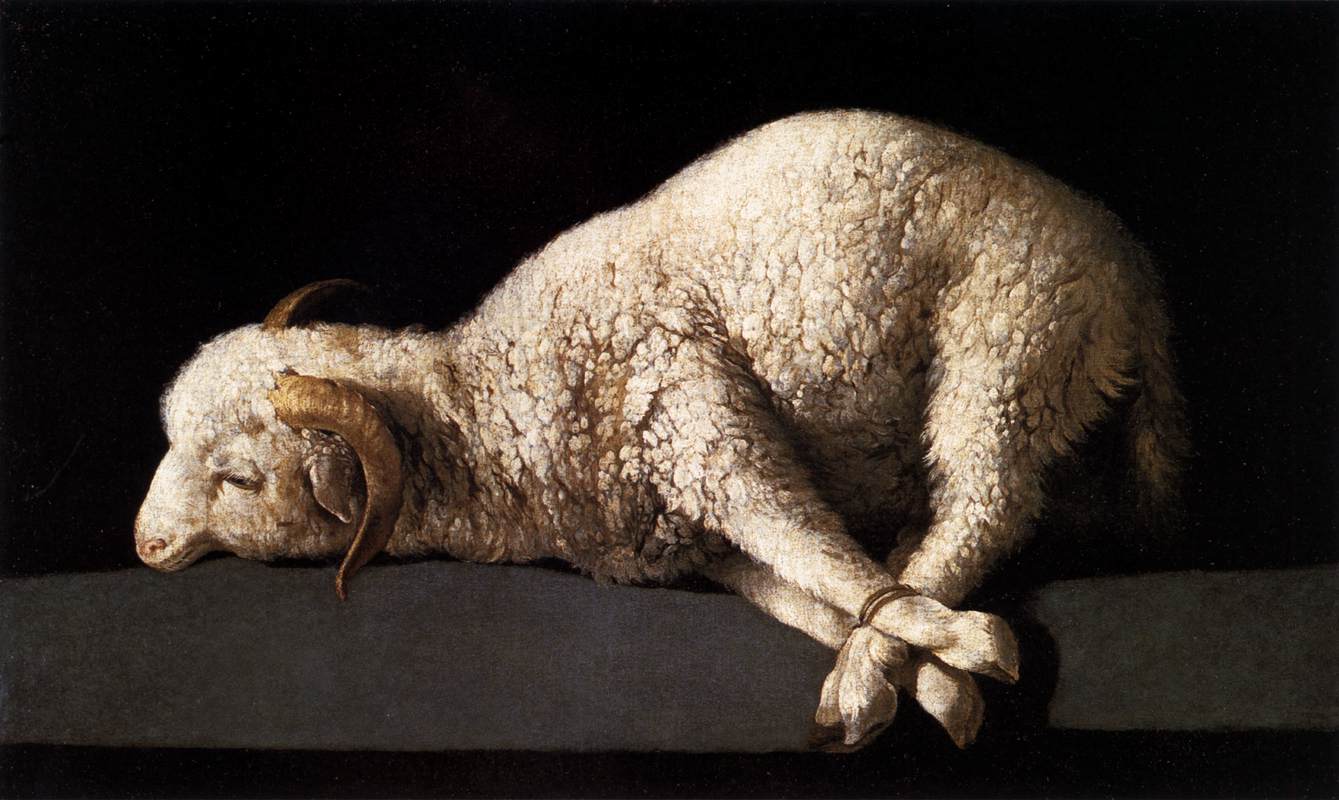
Agnus Dei

Agnus Dei
How G-d rules the world!
Showing posts with label Colombia. Show all posts

22 September 2010

An Article I Wrote After Colombia and Subsequently Forgot About

Conveying exactly what life is like in the Campo (the Colombian countryside) may prove difficult.  The distance between dirt-floor homes and fully-wired houses lies in more than geographical distance.  Understanding what occurs in small, Colombian, mountain hamlets will provide evidence concerning the complex issues of armed groups in the country. The problems involve remote, localized economies, a U.S.-funded Colombian military, powerful multinational mining corporations, and people struggling on all sides.  In this struggle, neutrality is impossible.  As nonviolent followers of G-d, we picked the side of the mining Campesinos (people from the countryside).  They are a forgotten people even though corporate greed and military might cannot forget the abundant resources they protect.
            For all the talk of creating small, local economies in progressive U.S. cities such as Portland or San Francisco, nothing in the States compares to the town in the Campo our small Christian Peacemaker Teams delegation visited.  As the miners pull raw material from the ground, they take 50% of the money made from the ores (gold, silver, lead, etc.).  The other 50% is given to the refinement workers who also have a mandatory minimum wage.  Others in the community farm on small plots of land, raise cattle, or run simple shops in order to support the region with goods.  Nearly all the money recycles through the town, sustaining it as well as the surrounding area.
            When talking with the leaders in the Campo, it becomes clear the government, in the past years, cared little for the region.  The roads, school, and other infrastructure projects received miniscule funding from Colombia’s governing bodies.  Presently, not much has changed.  While the residents lament the state’s lack of aid, they take pride in their own constructive efforts.  They boast of how they built a road, and they do not let you forget that they all pay to send their children to school.  No adequate healthcare exists in the region, despite their best efforts.  This area seems completely off the government’s map. 
            Oddly, in spite of governmental apathy toward the area’s basic necessities, upon former Colombian President Alvaro Uribe’s orders, a small contingency of soldiers established a base about a half mile from the town and a forward encampment no more than a football field away from the town plaza.  Interaction with the soldiers stationed at this base revealed to our delegation the army’s desire to protect the region from the leftist guerillas.  The security and protection of the Campesinos sounded like their primary objective.  A lieutenant intimated how their activity safeguarded the people.  Meanwhile, a man in the mines received a compound leg fracture after rocks tumbled onto him.  The nearest health center (not hospital) is three hours away across rocky, rough driving in the mud.  The nearest hospital where actual operations for serious injury can occur lies 11 hours away.  Under such conditions, a compound leg fracture can be fatal.
            Good thing no guerillas attacked.
            Is the Colombian government interested in the well-being of women and men living in the Campo?  The army seems to think so, but precedent begs to differ.  The Uribe presidency has been notorious for using military strength to displace Campesinos.  The numbers include a staggering average of 300,000 displaced people per year over the last 10 years.  Colombia ranks third in the world behind Afghanistan and Sudan in total volume of internally displaced people with over 4 million.  Typically, these displacements are done “legally” under the theory that in the city, the people will enjoy the benefits of improved infrastructure.  Once the people are out of the way and safe in the big, unfamiliar city, the land left behind by these displaced groups becomes subject to transnational corporations who exploit the resources and export the profits.              What is more, the place we visited sits at the base of a mountain that may contain the largest gold reserves in Colombia.  In the surrounding areas, a Canadian-based multinational mining corporation, AngloGold Ashanti, has been receiving large quantities of land concessions from the Colombian government.  The largest gold reserve in the country cannot be far off their radar.  The combination of a military base applying pressure, poor health and education due to subpar infrastructure, a powerful multinational seeking gold, a huge quantity of gold, and a history of internal displacement might make the perfect formula for driving these artisan workers off their land, out of their homes, and into the growing population of unemployed city dwellers.
            Can this be stopped?  We certainly hope it can.  Nevertheless, in this potent situation, we see only a microcosm of the greater issue.  The prevailing winds of the new so-called global economy places profits as higher values than people.  Thus, even violence is permissible when securing new capital.  The answer to the question, “Can this be stopped?” is a simple “Yes,” but only when we stop.  If we in the global North cease our exuberant habits and live simply, the violence in Colombia may begin to end.  When people not profits become the highest value, perhaps Colombia’s government will provide for the poorest of the poor rather than force them into urban unemployment.  The time has come for us to realize our own complicity in violence under the auspices of making a better life for ourselves.  The time has come for us to realize peace can only occur when the only violence is the destruction of our own desire for material wealth and satisfaction.

-ben adam 

04 June 2010

Coping With Identity and Place: Resistance as a Way of Life

Right now, I am sitting in a coffee shop.  This is no ordinary Starbucks; this is a dyed-in-the-wool coffee roaster.  From my vantage point, I can watch two casually-dressed, scruffy-faced fellows load coffee beans into a large roaster which slowly churns the beans as they cook.  They then transfer them into bags which they label, seal, and box.  One of the large burlap bags from which they take their beans is labeled in all caps "Product of Colombia."  In a way, the bag has been staring at me for the last hour or so.  It discomforts me.

When we were in Colombia, we were told the coffee there was terrible.  Not being a coffee drinker myself, I took people's comments at face value.  It was a shocking reality.  Colombia's coffee reputation precedes itself as being a prime locale from which coffee derives.  Even I knew that.  Juan Valdez hails from Colombia, and it only seemed natural that, in country, the coffee would be superb.  It isn't, and there is one reason why.

I read on the plane back to the States that the U.S. is by far the world's largest coffee consumer.  Based on no evidence whatsoever, I am going to go so far as to say that Seattle is, per capita, the greatest consumer of coffee in the U.S.  Even if this is completely false, a lot of people drink a lot of coffee in Seattle.  Now, more than a week after I left Colombia, I am facing a bag of quality Colombian coffee in one of the most coffee-saturated cities in the world.  There is a major disconnect here.

The issue is no longer free trade versus fair trade.  The issue is a society who thinks it is entitled to the wealth and resources of others.  When the resources indigenous to a region become a scarcity, something has gone awry.  Coffee consumption might be the best measure of this problem.  For all its liberal rhetoric, Seattle leads the way in majority world exploitation or, at the very least, robbery.  Herein lies the problem with the liberal agenda.  It wants reform.  This agenda looks at the current system with affirmation.  Liberals then work to change the rhetoric and the people within the system.  They redefine the family to include same-sex couples, they elect non-white leaders, they provide jobs for women, and demand a minimum wage.  They do this in the name of the system's highest values and virtues, "equality", "freedom", and "opportunity".  The system accepts their reforms, and it return, it provides them with what they want: abundant coffee, luxury condos, "green" cars, fair trade foods from around the globe, and the latest styles of textiles.  In the end, they end up stealing coffee from Colombians as billions of people worldwide suffer for the sake of conscionable products.

In the end, the liberal agenda has been fighting the right battle on the wrong field.  Since they accepted the basic tenants of the system, their reform has done little more than put a different face on the same monster.  Meanwhile, they bow down to the monster in gratitude for its delivery of consumable goods.  Life lived for the creation of a truly new world requires one rejects the system, seeks to deconstruct it, and rebuilds within its ruins.  The new way of being pays no homage to the imperial monsters of neo-liberalism and capitalism.  Instead, it embraces diversity without demanding satiation.  It looks not beyond its own limited reach, and it is content with what it produces.  This is resistance at its greatest pinnacle: when it becomes very, very small.  It is time to reject this economic system outright, even if it costs us the benefits of good tasting coffee.

01 June 2010

Back From Colombia

Hello.  I am back from Colombia and other travels.  This is my first post about the experience, and I will be only discussing how the trip changed me but not why.

First, I went with Christian Peacemaker Teams, but very little of it was "Christian" in the narrowly defined Western view of Christianity.  We recognized our Christianity as a unifying subject but not a driving object.  I left feeling spiritually suffocated and dry.  Ironically, as difficult as this was, I appreciated it immensely.  It reoriented my faith away from an ecclesio-centrism toward resistance-centered spirituality.  It reminded me of my favorite verses in the Bible from Amos 5.21-24

I hate, I despise your festivals,
   and I take no delight in your solemn assemblies.
Even though you offer me your burnt-offerings and grain-offerings,
   I will not accept them;
and the offerings of well-being of your fatted animals
   I will not look upon.
Take away from me the noise of your songs;
   I will not listen to the melody of your harps.
But let justice roll down like waters,
   and righteousness like an ever-flowing stream.

The time for praise songs is up.  The time for justice has come.  The economic system that at this very moment continues to consume the world is one of death, and Christians must rise to challenge it.  If we do not, we become unfaithful.  We affirm G-d with our lips and avoid G-d with our lives.  Needless to say, it will be difficult to go to church and even more difficult to work for one which is a distinct possibility in the coming months.

I am now less concerned with doctrinal discrepancies.  If people are willing to stand and resist the dehumanizing power of global capitalism, then they are not against us.  I would say, in a sense, CPT made me more pluralist, but actually, it reoriented my objectiveness.  No more do I accept a Christian faith that pays homage to the flag.  That might sound harsh, but it is true.  G-d hates flags.

I now have a longing desire to learn Spanish and perhaps more languages.  I will be learning all I can about Latin America history and economics.  Hopefully, in the next couple years I will go back to school.  I am not sure what I will study, but my days of academic theology are almost over.  Certainly, I appreciated my theological education.  It will stick with me forever.  The skills I learned were invaluable, but the time has come to invest myself in something with which I am able to reach out beyond abstract statements concerning G-d.  Besides, my theological education may come best from the dirt rather than from the school built on it.

Finally, my new goal is deconstruction.  The government must be taken apart.  Neo-liberalism must be undone.  The systems and structures that support death must pass away.  In that rubble, up will rise the true Church.  The people who say no to death and yes to resurrection.  Certainly G-d will be on their side.  I cannot wait.  Peace!

-ben adam

10 March 2010

I Am Going to Colombia

At several moments in my life, G-d calls me in such a clear fashion it becomes impossible for me to avoid.  One of these moments happened about a month ago.  This is the brief story of that and the results.

A guy I know named Josh has a sister named Kait.  Kait went to Azusa Pacific University and majored in Social Work.  Following graduation, she moved to Vietnam to take a position with an Australian non-profit called AoG World Relief.  Not long ago, she visited Seattle for a little over a week during which time I discussed the details of her work and listened to many stories of her faithful undertaking.  In Vietnam, she worked doing general relief efforts while building connections with cohorts in order to begin a ministry for the liberation of women and men involved in sex trafficking.  Kait spoke with passion, excitement, and fervor while she exuded the Holy Spirit.  Her visit excited me.

More than excitement, I felt challenge.  The trouble with people practicing radical righteousness is their tendency to expose others' lack of integrity, particularly mine.  I saw in Kait a projection of everything good I wanted to do but was too afraid.  What holds me back?  Why do I stay in Seattle griping about rich, white people, working at a job I cannot stand, pretending as though one day I will be a respectable, Christian man who is known for his love for the oppressed.  Kait's visit exposed my fear.  I spent my life hesitating like those who hesitate to worship Jesus in Matthew 28 yet still receive the same command. 

Laid before me was my unwillingness to go where I feared.  I looked around at those whom I surrounded myself with.  I thought about Kevin and Marian Neuhouser specifically.  My great respect for them grew out of their experiences working among the poor and oppressed in Brazil.  Those times shaped them significantly in an extremely positive way.  My reflections revealed my need to partake in work amongst those who live beneath the heavy hand of empire.  Still, I feared.

Finally, during the first week of Lent, I prepared a sermon on Jesus' temptation in the desert in Luke.  In the sermon (which you can read below), I concluded Lent was a time in which we refuse the temptations that seem to grant us expedient relief or success and do the hard work to rid ourselves of actions that might embody these temptations.  What we give up, then, must be given up forever.  During the writing of that sermon, I felt the enunciation of Kait's challenge to my hesitant, complacent comfort manifest as G-d's ubiquitous command in the Bible, "Do not be afraid."  The command, so clear it was unavoidable, led me to sign up with Christian Peacemaker Teams (CPT).

From May 12-25 I will be in Colombia working with a delegation on behalf of small artisan miners and small farmers in order to maintain their safety and livelihood in the face of a multinational gold-mining corporation who wants to mine on the 3 million acres of land where these people live.  Paramilitary and Colombian military roam the region.  Finally, I am stepping out.  I am going to go do what I know the L-RD requires of me.  Hopefully, this will lead to a full-time, 3-year placement with CPT.  I certainly hope it does.  In any case, I am stepping out without fear, knowing G-d will be with me.  Peace!

-ben adam