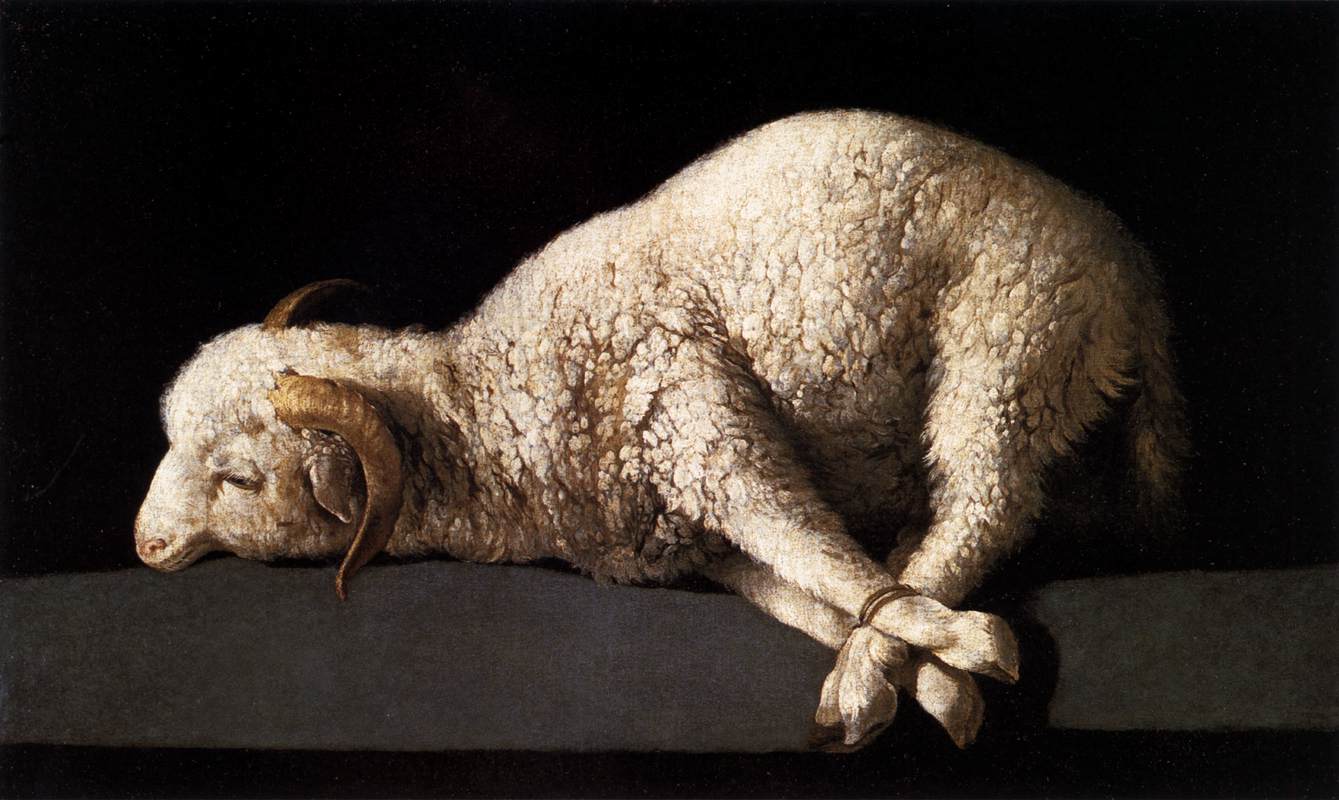
Agnus Dei

Agnus Dei
How G-d rules the world!
Showing posts with label Christianity. Show all posts

16 November 2010

Mega-church Pastors: Crooks and Their Books


I am like a barista who cannot drink another latte. I feel like an author who cannot write because she no longer likes words. I feel like I am taking crazy pills. Why do I feel like this? Of what am I sick and tired? I cannot bear to endure the written words of another popular, well-to-do mega-church pastor. Rob Bell, Mark Driscoll, Joel Osteen, Greg Boyd, I do not care who it is. I never want to see it ever again. It is like listening to a biologist talk about how biology should not be taught in schools. It is like watching an actor say to a reporter that movies need to end. Moreover, they are some of the cleverest marketers to ever walk the face of the earth, and I can no longer stand to see them ply their trade throughout the land.

My furious anger against these crooks recently rekindled while browsing at one of my housemate's books titled Crazy Love: Overwhelmed by a Relentless G-d by Francis Chan. I saw this book hundreds of times on the shelves of SPU students. I never looked closely at it. It appeared to me as though it carried another heart-felt, Chicken soup style message with a strong cultural relevance just like Blue Like Jazz or Velvet Elvis. As it sat on my coffee table, I nonchalantly reached over and snagged it. On the cover is a hip design of a rudimentary up-arrow next to an asymmetrically drawn down-arrow. Only the book's subtitle graces the cover, and it comes at the bottom right-hand corner right above the author's (and co-author's?) name. Chris Tomlin, the well-known worship artist, got a credit underneath the author(s) for writing the foreword. If you know me, you know that by the time I finished looking at the cover I was disgusted and annoyed. I decided to at least see what the book had to say; so I flipped it over and read the back cover. Its contents were less than surprising.

Right at the top, in big bold letters, the cover reads, “G-D IS LOVE. CRAZY, RELENTLESS, ALL-POWERFUL LOVE”. Ugh! I find it tragically obnoxious that someone finds it necessary to write this down in a book. The statement, “G-d is love” lies somewhere in a voluminous library of a book called the Bible (I doubt most people who read this book know where in the Bible). The truth of this statement resides in the call 1 John (that is the place where “G-d is love” is) makes of Christians which is loving community. This phrase, 1 John reassures us, means nothing outside community. Does community exist anywhere as important on the back cover? No, it does not, and I am a stickler for proper biblical interpretation. Strike two for this guy.

His sub-phrase kills me. “Crazy, relentless, all-powerful love” sounds psychopathic. I know it is supposed to convey some kind of amazing feeling of a loving G-d, but why? Why does he want to convey this message? I believe the answer to this is nothing less than self-righteous and pathetic. 

The first line beneath the back-cover's titles packs a punch, “Have you ever wondered if we're missing it?” The picture of the author at the pulpit and the dialogical style of writing make one feel as though he is asking you personally. The large letters above implicate that his thesis involves convincing the readers that once they understand G-d's psychopathic love then they will no longer be “missing” it. Of course, whatever this “it” is never receives mention. “It” could literally be anything. Another one line paragraph then enumerates what is going on with “it”. Apparently, “it” has gone wrong or at least “something” has.

These words were carefully chosen and cleverly designed. They paint a general picture of broad dissatisfaction and present an even vaguer answer to the problem. Any issue in one's life can be cut and paste into the problem. “Yes, something is wrong. I feel like I have been missing it.” The back-cover proceeds to muse about finding a meaningful, authentic faith. This hope for an authentic faith directly contrasts with the implied inauthentic faith listed as going to church, singing songs, and trying not to cuss as the typical response to the “G-d of the universe—the Creator of nitrogen and pine needles, galaxies and E minor”. Clearly, this author believes church-going and worship services are completely useless. They do not foster relationship with G-d. True relationship with G-d comes from a “faith that addresses the problems of our world with tangible, even radical, solutions”. The only way possible for something as monumental as a radical, grounded, transcendent faith is to fall madly in love with G-d. This will solve what is “wrong”. No longer will you miss “it”. Essentially, Chan promises an answer to every problem.

So, if you have been following me so far, here is the back-cover in a nutshell: G-d is love; something is wrong; church is not the answer; church is status quo faith; falling in love with G-d is the solution; and falling in love with G-d will change you into a person with radical, tangible ideas for solving the problems of the world.
Great! Sign me up! I'll fall in love with G-d! Please, just tell me how...wait a second. I call bull shit. Fall madly in love with G-d? That sounds like what my Sunday School teachers told me. Create an authentic faith? I am sure I have heard that sermon before. 

“I am sorry Francis, where did you say you work again?”
“Me? Oh, I didn't. I work at a mega-church I planted in California. I also founded a Bible College, and I sit on the board of some organizations. I have a family, too.”
“Oh, that makes sense. I mean, what pastor doesn't think church isn't the answer to...wait, what?!”

At this moment, I grew sick to my stomach. I held some suspicions, and the “About the Author” confirmed them. Francis Chan is no radical. He merely represents another spoke in the wheel of the system that convinces people they are outside the system. In Naomi Klein's No Logo, she discusses how our generation loves ironic marketing. Ironic marketing involves the product being sold portrayed in a negative light with some form of humor attached. Take for example the Old Spice commercials in which a man is seen showering. As the camera pulls back, he turns out to be a centaur (half person, half horse). A beautiful woman then comes to him and makes a funny comment. Now, no one is a centaur, and certainly, a woman would never be a centaur's partner. The whole thought of the commercial is extremely creepy. Who would buy something that advertises itself via bestiality? Nevertheless, it is exactly the type of advertising that dominates today's marketing campaigns, and Crazy Love uses the the same ploy. 
 
Chan leads the reader on to believe that his solution is something other than going to church. On the contrary, he himself pastors a church. He sits on the board of directors of an urban church-planting organization, World Impact. His church alone has planted nine different churches in six different states. He derides people's response to G-d as church-going, but he enables them at every turn. It is ironic advertising. It is akin to the new Microsoft cell phone commercials. These commercials chastise people who never stop using their smart phones. It posits at the commercial's end that the new Microsoft phone will solve the problem. Chan's advice does the same. He plays on a common frustration: church fulfills very little spiritual needs and does an extremely poor job of addressing critical issues occurring in the world. His solution claims the end of church, but it also demands going to church. Of course, falling in love with G-d only happens in the places where they are talking about G-d. Naturally, church is where one would go to did this falling in love.

More importantly, let us tease out the logic of his vocation and his book. First, it marks the general dissatisfaction of its readers. It then proposes a solution. This solution excludes the others who are a part of the problem: the churches who fail us. Francis Chan has your answers, and you can find them at: his church, in his book, through his sermons, or at one of his church plants. In the end, whether he intended it or not, his book is a shameless self-promotion. It grants him the answers, and the answer is just vague enough to get someone to want more. 

On a broader basis, I cannot deal with this kind of ludicrous production. These pastors grow into small celebrities then publish some kind of book based on poor bible scholarship and brand marketing. The content of these books is relentless and redundant. They dislocate their readers (who are typically youth and young adults) by telling them they need to disengage from their communities, find some hip, up-and-coming church, and congratulate themselves on a job well done. Furthermore, they do not actually call into question a sick society. They propagate an ethnocentric ideology that locates the world's problems as everywhere outside the confines of middle-class suburbia. Suburbia represents the ideal way of being, and the urban, the rural poor, and those living in Majority World countries (poor countries that make up a majority of the economic world) need to enter into the new earth that is little boxes on the hillside and massive quantities of Prozac. When a mega-church pastor calls for the dissolution of nation-states, the micro-organization of churches, the end of capitalism, and Jesus as a social and political revolutionary who stood up against an empire completely analogous to today's United States, then I will pay a little attention. Until then, I am tired of these crooks and their books. I am sick and tired of listening to their sermons. And I only pray that I never become like one of them.

26 June 2010

G-d Is Not a Woman, but We Can Call Her One

To all .25 people who might read this post, I am at my parents' house right now taking a much needed weekend from the intensity of Drift Creek Camp.  I hope all is well, and here is a reflection on some good conversations I had with people this past week.

A strange family works at Drift Creek Camp.  They live in a cultish familial community that engages very little with the larger Church and is very skeptical of those outside their own faith circle (imagine Westboro Baptist with less hate speech and funding).  They preach the typical fundamentalist line believing they follow the Bible and no one else does.  They do not cuss or talk about hot button issues. Moreover, they think the Church has "allowed" too many unsavory people into its realm.  What I found out rather quickly at camp is that I fit into their categories of heretical, sinful, and evil, although they might never say as much.  Oddly, we have quite a bit in common (no substances and disbelief in government); nevertheless, their style of belief and ministry has set me off.  I can hardly stand to be in their presence, and I hate that they get the opportunity to be around the campers.  Here is one topic we clashed on this week, and I am sure we will continue to clash on for the rest of the time I am there.

While the camp was at the beach, we were having fun and roasting marshmallows.  I raised my voice and asked, "Who invented Graham Crackers and why did she name them that?"  I saw, out of the corner of my eye, the man from the aforementioned family flinch, and he retorted, "What makes you think it was a woman who invented Graham Crackers?"  To which I responded, "Why would I assume it was a man who invented Graham Crackers?"  Honestly, his overt sexism looked about as assholey as his face since we were the only two males sitting around the fire.  Quickly, the conversation devolved into an argument over gender roles during which time I kicked the shit out of him (intellectually), and proceeded to yell at him and patriarchy in general.

I am no moderate when it comes to these situations.  If anything I am a raging liberal who could give a shit what the moderates have to say.  I am so sick of male-dominated systems.  When we talk of them, one looming problem looks us all straight in the face: everyone almost always refers to G-d with masculine pronouns.  This is an interesting dilemma, and I wish to address it here.

Is G-d a woman?  The obvious answer is "Absolutely not."  G-d does not have a sex.  G-d transcends such basic human definitions.  If G-d did not transcend sex, Genesis 1 would be entirely discredited, and I am not ready to do that.  Why then, do we refer to G-d with the gendered "he"?  Elizabeth Johnson gives an extensive argument concerning this topic in her book "She Who Is", but I do not have the time nor the energy to deal with her arguments.  Instead, I can say this.

For thousands of years, humanity has lived in a patriarchal system.  Women were considered property, sub-human, evil, incompetent, and various others deplorable things.  As such, anytime anything intelligent or important occurred, the credit was given to men.  Any unknown subject was masculinated since clearly a woman could hardly be credited with accomplishing something worthwhile.  Doing this means humans made the masculine normative.  That is to say men became the standard by which everything else was measured.  G-d received masculine titles because maleness was considered to be higher than femaleness.  The masculine was above all else.

This has gone on in our cultural collective consciousness for thousands upon thousands of years.  The effect on us is daunting.  What we now know, however, is that women are not property.  They are as equally as capable as men are at leading churches, corporations, countries, families, non-profits, and other activities.  Physically, they have a different shape but are made up of the same tissue and cells that men are.  If we know that maleness can no longer be normative since we have found women to be equally as capable as men and therefore equally as able to represent the standard by which humans should be measured, what does that tell us about G-d?  No longer are we able to refer to G-d exclusively in the masculine.  What is normative has changed.  Our theology must change as well.  For thousands of years we have called G-d "he".  In order to undo the male-dominance, the belief that the man is the norm, we must begin to refer to G-d as "she".  A gender-neutral phrase is not good enough.  It will only excuse patriarchy rather than confront it.  We need to hold patriarchy accountable.

By beginning to refer to G-d in the feminine, we look patriarchy in the eye and say, "No more."  This practice actively seeks to liberate the female and male consciousness that has, for thousands of years, subsumed the feminie to a status below the masculine.  Hence, even thought G-d is not a woman, we can call Her one as a way to confront and move beyond the pain and sin of patriarchy.  I hope you will join me in this work.  Peace!

-ben adam

01 June 2010

What Are We Missing?

I went to a wedding on Saturday.  Honestly, I hated it.  Traditional weddings bore me.  They followed the formula perfectly with a sermon about why everyone needs to be married, why men are not good without women as their helpers, and a call to the woman to "respect" her new husband.  I left pissed off even though he was a friend of mine for over 20 years.  What I found most striking, however, was my mother's response to my frustration.

My mother, the hopeless optimist, listened to me complain about the overt patriarchy occurring.  She responded with this, "Yes, you're right ben, but what I appreciated about the pastor's message is he called them to always put G-d first."  For me, this leaves me feeling completely unsatisfied.  Here is why:

What does "put G-d first" even mean?  How do we "put G-d first"?  The very thought of doing that puts me in an abstract activity of deity acknowledgment.  Honestly, to "put G-d first" cannot fulfill our needs.  If their marriage listens to and  follows in the direction of the pastor's advice and they work hard to put G-d first, what happens when they face a systemic problem in their marriage?  What if they go to church, pray every morning, read the Bible every day, and he beats her?  Are they any different than a couple who do not put G-d first yet suffer from male physical abuse?  Similarly, what if they have a flawless, fantastic marriage while putting G-d first?  Do others who do not put G-d first all have terrible marriages?  We must face Christians with the same divorce rate as the rest of society, even among the couples who "put G-d first".  We are missing something.

Every one of us missed something in that chapel.  Christians face a crisis because we miss it.  I do not know what it is.  I know what it is not: sex, money, drugs, alcohol, wealth, possessions, war, sovereignty, food, or whatever else it is we want.  Christians miss something in a significant way every day.  It leaves me feeling empty.  I do not know what putting G-d first means.  What I do know is if we do not begin to fight against the death-dealing powers ruling the world, there may not be much of a G-d to put first left.  We need to reclaim resistance as the source of our devotion to G-d.  Otherwise, we miss something.  We miss G-d giving us life in the face of powerful demons who bring only death.

Back From Colombia

Hello.  I am back from Colombia and other travels.  This is my first post about the experience, and I will be only discussing how the trip changed me but not why.

First, I went with Christian Peacemaker Teams, but very little of it was "Christian" in the narrowly defined Western view of Christianity.  We recognized our Christianity as a unifying subject but not a driving object.  I left feeling spiritually suffocated and dry.  Ironically, as difficult as this was, I appreciated it immensely.  It reoriented my faith away from an ecclesio-centrism toward resistance-centered spirituality.  It reminded me of my favorite verses in the Bible from Amos 5.21-24

I hate, I despise your festivals,
   and I take no delight in your solemn assemblies.
Even though you offer me your burnt-offerings and grain-offerings,
   I will not accept them;
and the offerings of well-being of your fatted animals
   I will not look upon.
Take away from me the noise of your songs;
   I will not listen to the melody of your harps.
But let justice roll down like waters,
   and righteousness like an ever-flowing stream.

The time for praise songs is up.  The time for justice has come.  The economic system that at this very moment continues to consume the world is one of death, and Christians must rise to challenge it.  If we do not, we become unfaithful.  We affirm G-d with our lips and avoid G-d with our lives.  Needless to say, it will be difficult to go to church and even more difficult to work for one which is a distinct possibility in the coming months.

I am now less concerned with doctrinal discrepancies.  If people are willing to stand and resist the dehumanizing power of global capitalism, then they are not against us.  I would say, in a sense, CPT made me more pluralist, but actually, it reoriented my objectiveness.  No more do I accept a Christian faith that pays homage to the flag.  That might sound harsh, but it is true.  G-d hates flags.

I now have a longing desire to learn Spanish and perhaps more languages.  I will be learning all I can about Latin America history and economics.  Hopefully, in the next couple years I will go back to school.  I am not sure what I will study, but my days of academic theology are almost over.  Certainly, I appreciated my theological education.  It will stick with me forever.  The skills I learned were invaluable, but the time has come to invest myself in something with which I am able to reach out beyond abstract statements concerning G-d.  Besides, my theological education may come best from the dirt rather than from the school built on it.

Finally, my new goal is deconstruction.  The government must be taken apart.  Neo-liberalism must be undone.  The systems and structures that support death must pass away.  In that rubble, up will rise the true Church.  The people who say no to death and yes to resurrection.  Certainly G-d will be on their side.  I cannot wait.  Peace!

-ben adam

17 February 2010

Messes of Ben

Welcome!

I had a blog once.  I shared it with two good friends.  The friends are still around, but the blog kind of died.  Then, I tried to follow another friend's blog on blogger, and for some reason I needed a blog to follow?  I think, but anyway, I made one.  Actually, I had been planning on making one for some time.  Here it is.

The title comes from the first song on mewithoutYou's fantastic third album Brother, Sister.  The song is titled "Messes of Men".  It is about messes we get into, particularly adultery.  I realize each day the mess I am in.  My ideological beliefs are fairly radical and difficult to live into.  What's more, my beliefs are radically different than the dominant belief structures of our day.  I am therefore faced with a predicament.  I believe in a difficult moral standard that subverts most worldviews (Christian and secular alike).  Consequently, I attempt to employ my mess in a way that subverts the dominating mess we face in society today!  What a mess!

My new blog exists to chronicle my experiences of attempting to mess up our tidy evaluations of what Christian living really is (especially since the Christians are so lukewarm and the non-Christians think that's what G-d is like!).  I will write my sermons here, summarize books I am reading, narrate my adventures in volunteering with homeless shelters and other groups, and chronicle my own personal struggles to live radically.  I hope you will join me.  It should be an absolute mess.  Peace!

-ben adam